Research news
A study [1] published in Molecular Cancer Therapeutics introduces a novel dual-function cancer compound designed to concentrate treatment inside tumours, potentially allowing higher effective doses while limiting exposure to healthy tissue.
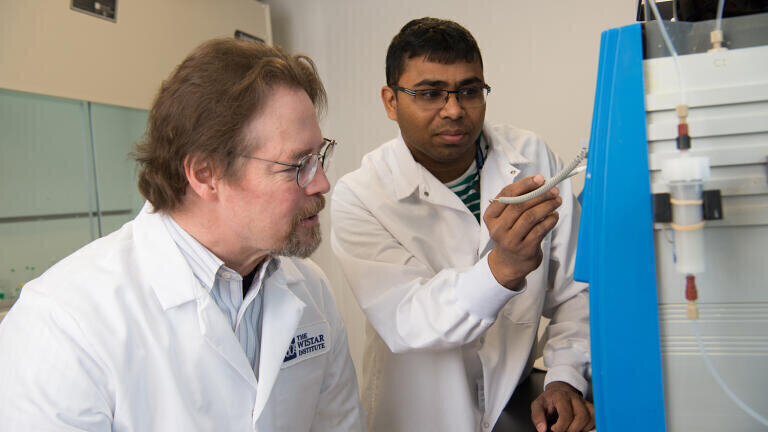
Researchers at The Wistar Institute, in collaboration with Fox Chase Cancer Center and Yale University School of Medicine, fused an Aurora kinase A (AURKA) inhibitor - a drug known to disrupt tumour cell division - to a tumour-targeting molecule that binds HSP90, a protein highly expressed in cancer cells. The resulting small-molecule drug conjugate accumulates selectively in tumours and remains active there for longer, overcoming a key limitation of conventional AURKA inhibitors: toxicity in healthy tissue.
In preclinical studies across multiple cancer types, including head and neck, lung, and melanoma models, the conjugate halted cell division and killed cancer cells. Animal models showed tumour accumulation up to ten times higher than the unconjugated drug, with activity lasting 24 hours. Combining the drug with a WEE1 inhibitor further enhanced tumour control.
“This approach addresses one of the main reasons oncology drugs fail: inadequate tumour exposure,” said senior author Joseph Salvino, PhD. “By improving where the drug distributes, we can potentially revitalise an existing therapeutic mechanism rather than starting from scratch.”
The platform could be applied to other drug targets and cancer types, and the team is exploring an oral formulation for future studies.
More information online
ILM 51.6 Sept 2026




 Product directory


















,-photo-Karin-Allander.jpg)