Research news
A new £14 million UK research hub will harness the power of engineered microbes to convert industrial waste into high-value, sustainable products - including pharmaceuticals and cosmetics.
Led by the University of Edinburgh, the Carbon-Loop Sustainable Biomanufacturing Hub (C-Loop) will use advances in engineering biology to recycle carbon-rich waste normally sent to landfill. By turning this material into next-generation chemicals, the project aims to reduce dependence on fossil fuels and support a more circular, low-emission manufacturing economy.
More than 90% of everyday products are currently made using unsustainable, fossil-based processes. C-Loop will offer a biological alternative - using custom-designed microorganisms to break down waste and build new materials in a clean, scalable way.
The hub will also establish the UK’s first BioFactory: a national platform for analysing industrial waste, evaluating sustainability, and scaling up bio-based production. It is one of four national centres funded by the Engineering and Physical Sciences Research Council (EPSRC), part of UK Research and Innovation (UKRI), which is providing £11 million of the total funding.
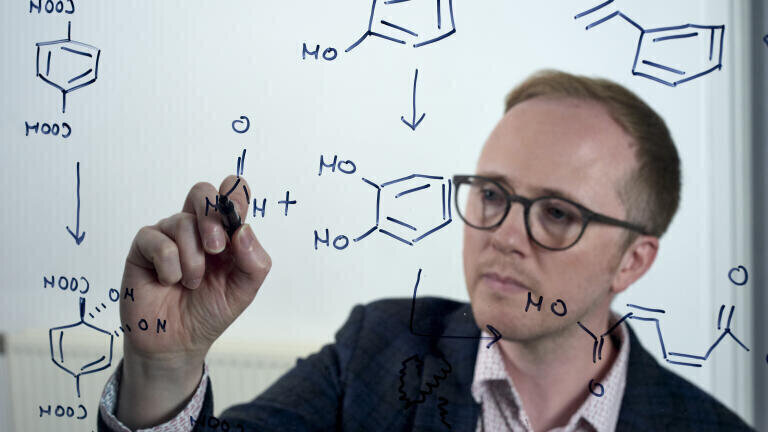
Professor Stephen Wallace, Director of C-Loop and Chair of Chemical Biotechnology at the University of Edinburgh, said:
“Amid climate change and resource depletion, we urgently need to defossilise manufacturing. C-Loop brings together diverse expertise across biology, chemistry and engineering to help deliver the UK’s transition to sustainable production.”
The hub involves researchers from Manchester, Nottingham, Surrey, UCL and Imperial College, alongside over 40 industrial partners across seven sectors. These include national innovation centres such as IBioIC and key infrastructure like the Edinburgh Genome Foundry.
Dr Jen Vanderhoven, Chief Operating Officer at BBIA and Chair of the C-Loop Board, added:
“There’s no time to waste in getting to no waste. This project tackles major environmental challenges while unlocking new economic opportunities through the upcycling of carbon waste.”
C-Loop aims to accelerate the adoption of engineering biology technologies in UK industry, create new sustainable supply chains, and support the growth of a low-carbon bioeconomy.
More information online
ILM 51.6 Sept 2026



 Product directory


.jpg)
.jpg)












,-photo-Karin-Allander.jpg)


.jpg)

.jpg)