Mass spectrometry & spectroscopy
Published over 8 years ago. See the latest and most current information on Mass spectrometry & spectroscopy.
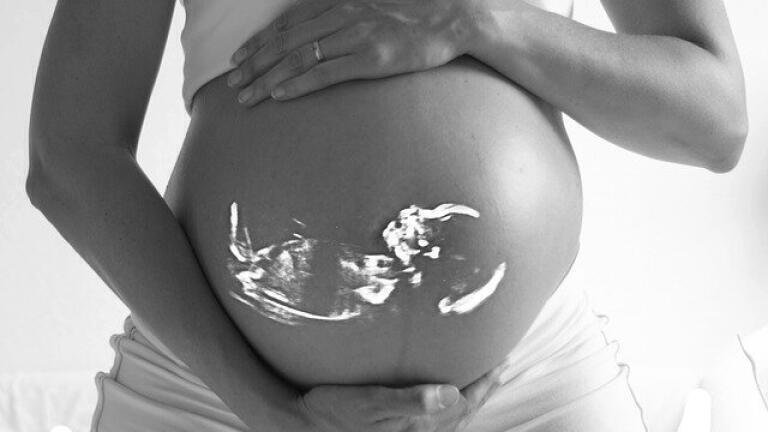
For most mothers, ultrasounds offer an exciting glimpse at a tiny new life. However, they've also received their fair share of controversy, with some experts warning that prenatal ultrasounds could be linked to autism. Now, a new study has helped to ease these fears and confirm that on almost every level, ultrasounds don't increase the risk of developing autism.
The fears were sparked by statistics suggesting that rising rates of autism diagnosis correlate with an increase in the number of ultrasounds women receive during pregnancy. Over the past few decades prenatal ultrasounds have not only become increasingly regular, but also more powerful. Today's scans rely on sound waves that actively penetrate the mother's body, then bounce back to form a picture of the foetus. While there's no proof that ultrasounds can cause autism, some studies suggest that when conducted on animals they can interfere with brain development.
According to new research published in the journal JAMA Paediatrics, the fears are unwarranted. On the contrary, children diagnosed with autism were exposed to fewer ultrasounds. Study co-author Jodi Abbott, a maternal foetal medicine specialist asserts that the findings should be “very reassuring” to parents.
The study compared ultrasound exposure among three different study groups - children diagnosed with autism spectrum disorder, children diagnosed with a developmental delay and children showing normal signs of development. Interestingly, children on the autism spectrum were exposed to an average of 5.9 ultrasounds, while their typically developing counterparts were exposed to around 6.3 scans. Children with developmental delays were somewhere in the middle, exposed to an average of 6.1 scans.
“In almost every parameter we looked at, ultrasound seemed perfectly safe,” asserts study co-author N. Paul Rosman.
So if ultrasounds aren't the culprit, what is causing autism diagnosis to spike? Researchers are currently searching for clues, with some experts suggesting that hereditary cases and "genetic hotspots" could be on the rise. Other experts place the blame on factors like older parents, as well as maternal obesity. Smoking and drinking during pregnancy is also a concern, while pregnancy and birth complications can also push children onto the spectrum.
While there's no solid evidence, some experts maintain that vitamin deficiencies can cause autism. Exploring qualitive, quantitative and derivative angles, 'Using UV/VIS Spectroscopy for Different types of Vitamin B12 Analysis' looks at the different ways of identifying cyanacobalamin, aka Vitamin B12.
ILM 51.6 Sept 2026





 Product directory