Mass spectrometry & spectroscopy
Published over 8 years ago. See the latest and most current information on Mass spectrometry & spectroscopy.
Every now and then, a new study or scientific concept goes viral. This unfolded earlier this month, when a team of scientists claimed that blood sourced from young bodies could reverse the signs of Alzheimer’s. The study flirted with the age-old "fountain of youth" and as a result garnered global attention. Unfortunately, the results were nowhere near as promising.
In fact, following rigorous clinical tests scientists have confirmed that blood plasma donated by healthy young people does little to reverse the signs of Alzheimer’s. The study examined eight patients, all diagnosed with mild or moderate Alzheimer’s. While caregivers did report minor progress, none of the patients showed signs of improvement on cognitive tests.
The trial was sponsored by Alkahest, a US based company with a mission statement to "enrich the health and vitality of humankind through transformative therapies that counterbalance the aging process." While the results didn't swing in their favour, CEO Karoly Nikolich has confirmed that Alkahest will be moving forward with more trials.
The idea that young blood plasma has the power to arm the body with anti-ageing benefits comes from somewhat macabre experiments performed over 150 years ago. Now, modern scientists are revisiting the concept, with a recent Stanford University study suggesting that after receiving human umbilical cord blood elderly rodents showed significant improvement on memory test scores. Now, researchers are on the hunt for the specific molecules that trigger these so called "anti-ageing" benefits.
While such studies are promising, experts maintain that trials are too small to confirm if the improvements are genuine. Zaven Khachaturian is a scientific advisor to the Alzheimer’s Association and stresses that to move forward scientists need to pinpoint and "explain the potential mode of action.”
As well as public health, there's also plenty of cash on the line. Currently, a private clinic in California is charging patients US$8000 to undergo a two-day plasma treatment, which has sparked mixed reviews from the scientific community. While the company has labelled the blood plasma transfusions as "clinical trials" researchers have accused the programme of being unscientific.
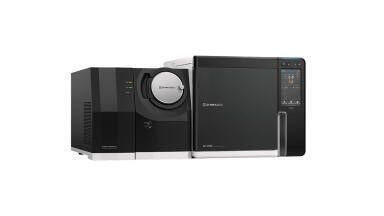
For more insight into the latest lab developments don't miss 'Pushing the Limits of Speed and Sensitivity in Drug Screening – an LC-MS solution.' Written from a forensic toxicology perspective, it spotlights the powerful instruments that allow researchers to focus on the unambiguous identification of parent drugs and their corresponding metabolites.
ILM 51.6 Sept 2026




 Product directory