Mass spectrometry & spectroscopy
Published over 6 years ago. See the latest and most current information on Mass spectrometry & spectroscopy.
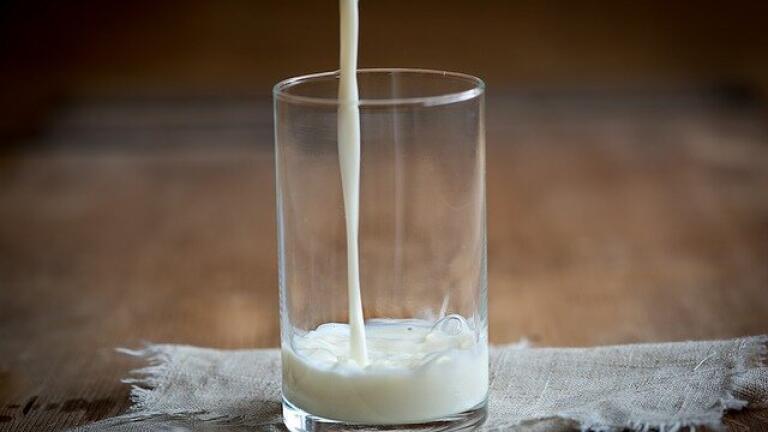
While some purists swear by full cream milk, a new study from Brigham Young University (BYU) warns that drinking milk with high-fat content can accelerate ageing by 4.5 years. The study involved 5834 adults and found that a preference for non-fat or 1% milk correlates with longer telomeres and slower biological ageing.
The study was spearheaded by BYU science professor Larry Tucker, Ph.D., who says the difference between drinking low-fat and high-fat milk is profound. "It was surprising how strong the difference was," he says. "If you're going to drink high-fat milk, you should be aware that doing so is predictive of or related to some significant consequences."
To investigate the ageing effects of milk, Tucker and his team explored the link between fat content, intake frequency and telomere length, the nucleotide caps on the tips of human chromosomes. Telomeres become shorter with age and shed a tiny portion every time a cell replicates, meaning age inevitably correlates with shorter telomeres.
According to the BYU study, which was published in the journal Oxidative Medicine and Cellular Longevity, drinking high-fat milk adds 4.5 years worth of ageing to telomeres. Specifically, for every 1% increase in milk fat content telomeres lost 69 base pairs of length, or the equivalent of 4.5 years of biological ageing.
"Milk is probably the most controversial food in our country," says Tucker, who doesn’t' sugar-coat the merits and pitfalls of the popular dairy product. "If someone asked me to put together a presentation on the value of drinking milk, I could put together a 1-hour presentation that would knock your socks off. You'd think, 'Whoa, everybody should be drinking more milk.' If someone said do the opposite, I could also do that. At the very least, the findings of this study are definitely worth pondering. Maybe there's something here that requires a little more attention."
Almost 50% of the study participants drank milk daily, while 25% consumed the dairy product at least weekly. Around one third preferred full-fat or whole milk, with 30% choosing 2% milk. Just 10% consumed 1% and around 17% stocked their fridge with non-fat milk. 13% of participants drank no cow's milk.
For Tucker, the findings support the current Dietary Guidelines for Americans suggesting adults drink low-fat or non-fat milk. "It's not a bad thing to drink milk," says Tucker. "You should just be more aware of what type of milk you are drinking."
Used heavily in diagnostic medical laboratories, mass spectrometry has emerged as a critical type of analysis. Spotlighting the rapid growth rate of mass spectrometer techniques, 'Recent Advances in HRAM Mass Spectrometry' features expert commentary from Pat Perkins, David Weil, and George Stafford.
ILM 51.6 Sept 2026



 Product directory


.jpg)
.jpg)

























.jpg)
