Mass spectrometry & spectroscopy
Malaria, caused by Plasmodium falciparum – a single-celled protozoan parasite – has remained a major global health threat, with more than 600,000 deaths each year, the majority among young children in sub-Saharan Africa. Immunity to severe malaria develops only after repeated infections and is mediated by antibodies that prevent the parasite’s diverse PfEMP1 adhesion proteins from binding to the human endothelial protein C receptor (EPCR) on blood vessel walls.
In a collaborative study between scientists at the National Institute for Medical Research, in Tanzania, and the University of Copenhagen, Denmark, has identified plasma donors with antibodies able to block multiple PfEMP1 variants from binding to EPCR.
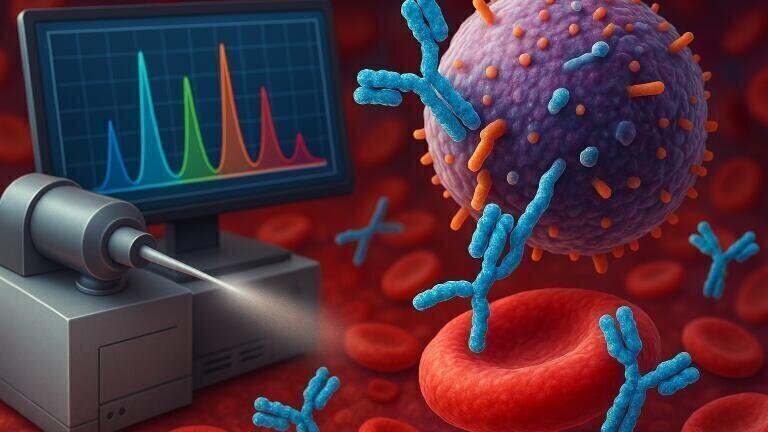
With philanthropic support from the Canadian biotechnology company Rapid Novor, its REpAb® antibody discovery platform was used to determine the amino acid sequence of a monoclonal antibody that displayed broad inhibitory activity against diverse PfEMP1 proteins. This has marked the first application of mass spectrometry to identify a functional plasma antibody that had developed naturally after infection.
Protein structural analysis conducted with researchers at The Scripps Research Institute, in California, showed how this broadly neutralising antibody binds to conserved residues across PfEMP1 variants to block the parasite’s adhesion.
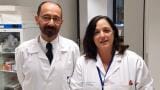
“By sequencing a naturally acquired antibody circulating in the blood and seeing exactly how it binds, we have gained valuable insight into the protective antibody response against malaria,” said Dr Louise Turner, senior scientist at the Centre for Translational Medicine and Parasitology, University of Copenhagen.
“We can now identify functionally significant inhibitory antibodies directly from individuals naturally exposed to infection.
“This provides a powerful way to study naturally acquired antibody responses and generate leads for our vaccine research,” said Professor Thomas Lavstsen, Centre for Translational Medicine and Parasitology, University of Copenhagen.
The study involved collaboration between the Centre for Translational Medicine and Parasitology, Department of Immunology and Microbiology at the University of Copenhagen and the Department of Infectious Diseases, Rigshospitalet, Denmark; the National Institute for Medical Research, Tanzania; Rapid Novor, Canada; and The Scripps Research Institute, California, United States.
For further reading please visit: 10.1073/pnas.2508744122
mass spectrometry, malaria, antibodies, vaccine, research
ILM 51.6 Sept 2026



 Product directory






















.jpg)
