Mass spectrometry & spectroscopy
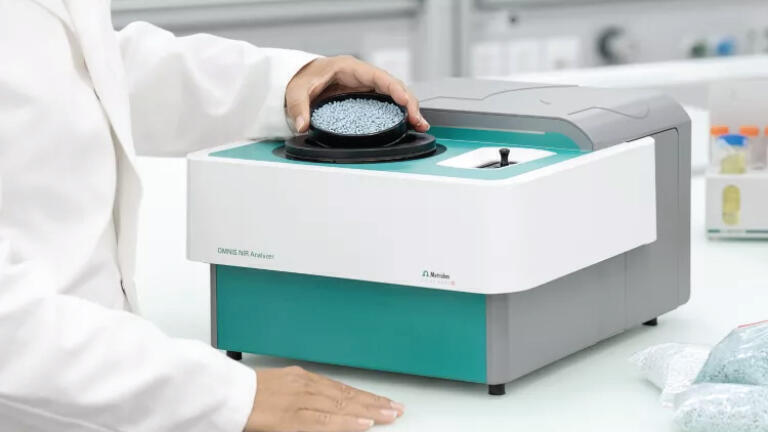
Polymers play a crucial role in modern life, offering durability, versatility, and cost-effectiveness. Ensuring these materials meet stringent quality standards throughout production, from raw material inspection and polymerisation monitoring to additive control and final product evaluation, is vital for product reliability and manufacturing efficiency. To achieve this, the polymer industry increasingly relies on advanced analytical techniques such as Raman and near-infrared (NIR) spectroscopy.
Raman and NIR spectroscopy are complementary methods that provide rapid, non-destructive, and precise analysis of polymers at various production stages. Their adoption in quality control (QC) processes helps mitigate human error, enhances safety by reducing direct chemical exposure, and streamlines laboratory workflows. By integrating these spectroscopic techniques, polymer manufacturers can gain deeper insights into their materials, improve product quality, reduce waste, and enhance overall efficiency.
To explore the benefits and applications of NIR and Raman spectroscopy in polymer analysis, Metrohm offers a comprehensive e-book titled "Near-infrared and Raman spectroscopy for polymer analysis: An introduction." This resource provides an overview of both analytical techniques, detailing their optimal applications within the polymer manufacturing process. It includes practical examples of polymer identification and verification for various materials.
Additionally, the e-book discusses specialised Raman technologies for polymer applications, unique Raman and NIR solutions provided by Metrohm, and insights into using these spectroscopic methods alongside Process Analytical Technology (PAT) for comprehensive polymer analysis.
By leveraging the insights and methodologies outlined in this e-book, professionals in the polymer industry can optimise their QC processes, ensuring high-quality products and maintaining a competitive edge in the market.
ILM 51.6 Sept 2026



 Product directory






















.jpg)
