Mass spectrometry & spectroscopy
Published over 12 years ago. See the latest and most current information on Mass spectrometry & spectroscopy.
Helium Shortage Affects Laboratory Productivity
The helium supply chain crisis has negative implications on research and laboratory operations world-wide. Despite the willingness of the GC and GC-MS laboratories to pay anywhere from $350 (on average) to a more costly $1,500 per cylinder (~3.5 m3 ) for ultrahigh purity (UHP) helium, rationing and delayed deliveries still cause difficulty in production planning and uncertainty in instrument productive uptime. Although the GC & GC-MS segment consumes less than one percent of the global helium supply usage per year, the shortages and delivery interruptions have wide-spread con-sequences for many industries utilizing varied analytical techniques.
Barriers to the Adoption of Renewable Gas Options
The severity of the helium crisis is evident when acknowledging that the helium, itself, is a non-renewable resource that is not in extreme abundance. Helium prices have tripled or quadrupled in some areas, and delivery uncertainty has not convinced the majority of GC-MS laboratories to switch to hydrogen - a readily available and renewable alternative carrier gas. For an effective carrier gas switch, methods need to be re-developed or translated and re-validated, the QA/QC criteria require adjustment, and problems caused by the reactive hydrogen gas in the MS ion source need to be addressed. In addition, for some regulated industries, helium carrier gas is still stipulated in the GC or GC/MS methods to which they must adhere.
Solutions to Mitigate Helium Supply Constraints
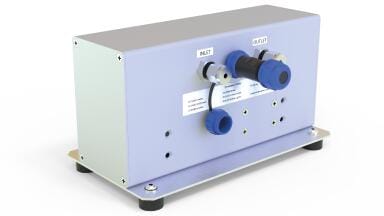
A revolutionary invention provides an effective solution to limit the effects of the helium crisis in the GC and GC-MS industry. The Thermo Scientific™ Helium Saver technology, available as an instant connect module that a user can easily place into the GC, allows for a single cylinder of helium to last up to 14 years under certain conditions - or for the lifetime of most GC-MS instruments.
The use of helium is optimized by this innovative GC inlet, which is supplied with two gases: helium for the analytical column flow, and nitrogen for septum purge, split flow, and sample vaporization and introduction, thus eliminating the helium waste typical in a standard GC inlet. To keep things simple, the split/splitless injector remains exactly the same, and the helium carrier gas flow through the analytical column remains the same at the specified flow rate.
Maintain Methods while Conserving Costs and Supplies
This technology enables you to continue your analyses without helium supply concerns or extensive supply costs. Save precious non-renewable noble helium during the analytical run, as well as when your instrument is idle. Since all of your analytical conditions remain the same, the retention time does not change. Keep your methods intact, validation-effective, and regulation-compliant. Significant savings can be realized in helium supply throughout the lifetime of your GC or GC-MS instrument.
Find out how to conserve helium during your analyses and extend helium cylinder lifetime at thermoscientific.com/heliumsaver
ILM 51.6 Sept 2026





 Product directory