News
Published over 10 years ago. See the latest and most current information on News.
The mind is an infinitely complex mystery, with countless theories on how to master, control and influence the cognitive faculties that are intrinsic to every human. Reverse psychology is one of the more widely recognised techniques, used by both professional psychologists and everyday people alike.
But what exactly is reverse psychology, and what makes it so powerful?
As the name suggests, reverse psychology is based on the idea that it’s possible to advocate for a belief or behaviour that’s opposite to the one that’s desired, with the goal of triggering the subject to do the opposite of what’s suggested. In the psychology sphere it’s referred to as ‘paradoxical intervention.’
For example, a common form of reverse psychology is to ban an action or behaviour with the intention of inspiring the subject to do just that. Another is suggesting a person is incapable in a bid to help them harness their capabilities. A mother suggesting that her daughter can’t afford to buy her father a birthday present, thus prompting the daughter to go out and purchase a gift, is an apt example.
This type of behaviour is based on reactance theory, the idea that when people feel as though their sense of self control is dwindling, they’ll snatch it back by not reacting in the way they’ve been told. As a result, reverse psychology is generally more effective when used on people who have a high need for control. Rebellious teenagers, Type A personalities, narcissists and psychopaths are ideal candidates.
“It’s more empowering to think that you did something out of your own free will than because you were forced, threatened, shamed into it or are afraid of losing that relationship,” explains Dr. Jeanette Raymond, an LA based psychologist.
The mind can be influenced by a multitude of factors. While reverse psychology doesn’t work on everyone, drugs and medicines generally produce reliable results. ‘Stem Cell Promise - Research Brings Autograft Revolution Closer’ looks at the potential of stem cells to revolutionise the treatment of many diseases, including Alzheimer’s. It explores the ground breaking work of Professor Anthony Hollander, ARC Professor of Rheumatology & Tissue Engineering in the Department of Cellular & Molecular Medicine at the University of Bristol, UK. His team has perfected stem cell culture protocols that provide the consistent starting material essential for all areas of their bioengineering research, including the development of the world’s first ever bioengineered tracheal graft.
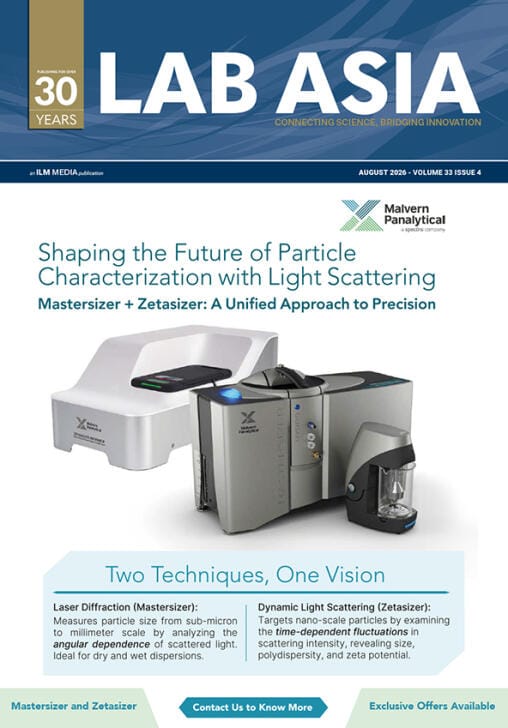
Lab Asia 33.4 - August 2026
 Product directory