
Research news
Researchers have developed a simple, low-cost blood test that identifies a distinctive chemical signature of lung cancer cells, distinguishing patients from healthy individuals with high accuracy in an early clinical study, without the need for DNA sequencing
Researchers at Tel Aviv University, Israel, have developed a novel method to diagnose lung cancer with a blood test that is simple, fast and low-cost, and does not require DNA sequencing. The test identifies a chemical fingerprint of cancer cells in the blood through analysis of cell-free DNA – known as cfDNA – fragments of genetic material shed into the bloodstream by cells, including tumour cells. In a study of patients with stage 2–4 disease, the test distinguished lung cancer patients from healthy individuals with a sensitivity of 93.1 per cent and a specificity of 90.3 per cent.
The study was led by Professor Yuval Ebenstein of the School of Chemistry in the Faculty of Exact Sciences, the Department of Biomedical Engineering and the Zimin Institute at Tel Aviv University, working with colleagues from JaxBio Technologies, Bnai Zion Medical Center and Sheba Medical Center.
Lung cancer is the leading cause of cancer-related death worldwide. Early diagnosis currently relies primarily on computed tomography scans but these tests are expensive and can be difficult to access routinely.
Existing liquid biopsies, meanwhile, generally rely on DNA sequencing, which is also a costly and complex process that requires advanced computational infrastructure beyond the reach of many clinical laboratories.
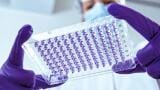
Now, this novel method bypasses the need for DNA sequencing. The researchers first extracted cfDNA from a blood sample and labelled it with a light-emitting marker and placed into a purpose-built DNA chip developed by the team. The chip is then read by an optical scanner with the resulting light patterns rapidly analysed to identify if the biological fingerprints of lung cancer are present.
The current study included 103 participants of which 51 patients had lung cancer and 52 were healthy control subjects. After a training phase, the researchers developed a signature that comprised 170 genomic regions and tested it on a separate validation cohort through blinded analysis which was shown to achieve a high level of diagnostic accuracy. The test could also distinguish between the two main subtypes of lung cancer, adenocarcinoma and squamous cell carcinoma, on the basis of distinct DNA signatures.
Beyond diagnosis, the researchers examined the test’s potential to monitor how well patients respond to treatment. Among the patients evaluated, changes in the chemical fingerprint of the DNA corresponded to imaging findings. In patients who responded to treatment, the fingerprint shifted towards the profile typical seen in healthy individuals, whereas no significant change was observed in those who did not respond. The researchers stressed that these were only preliminary results, and that large-scale studies are needed to confirm the method’s ability to track treatment response.
According to the researchers, the technology’s main advantage lies in its combination of simplicity, low cost and speed. At present, the test can be completed within two to three days, at a suggest estimate cost of approximately US$60 per sample. They hope that – in future – it will complement imaging tests, assist in the early diagnosis of lung cancer and help doctors track how effectively treatment is working.
“Our goal is to make blood tests for cancer diagnosis more accessible, simpler and less expensive without compromising accuracy.
“We have developed a new approach that does not require genetic sequencing but instead identifies the tumour’s chemical ‘fingerprint’ with light, using a technology that can be implemented in standard clinical laboratories.
“This is a significant step towards developing a tool that can complement imaging tests and help physicians diagnose lung cancer and monitor treatment effectiveness,” said Ebenstein.
For further reading please visit: 10.1038/s41698-026-01547-2
ILM 51.6 Sept 2026



 Product directory















,-photo-Karin-Allander.jpg)






.jpg)
