News
Researchers have found that three major disease-carrying mosquito species prefer different people, with variations in human skin chemistry and the microbiome helping to determine who attracts each species
There appears to be no universal human ‘mosquito magnet’, according to research which has found that different mosquito species are attracted to distinct combinations of human skin chemistry, odour and microorganisms.
In a recent study researchers at Florida International University (FIU), Miami, USA, compared the responses of three medically important mosquito species to 119 human volunteers. They found that no individual proved highly attractive to all three species. Instead, each mosquito species consistently favoured a different subset of people.
The results suggest that susceptibility to mosquito bites cannot be explained by a single characteristic shared by people who are frequently bitten. Instead, attraction appears to depend substantially on the interaction between the sensory biology of a particular mosquito species and an individual person’s chemical signature.
The finding could have implications for attempts to prevent mosquito-borne disease. If different mosquito species detect and interpret human odours in different ways, researchers may be able to identify chemical compounds that selectively attract or repel particular species. Such knowledge could ultimately support the development of more precisely targeted repellents and mosquito-control strategies.
“Isolating the components of human odour that attract or repel mosquitoes could lead to novel strategies to combat vector-borne diseases,” said Dr. Matthew DeGennaro, a neurogeneticist who led the research team and is director of the Biomolecular Sciences Institute at FIU.
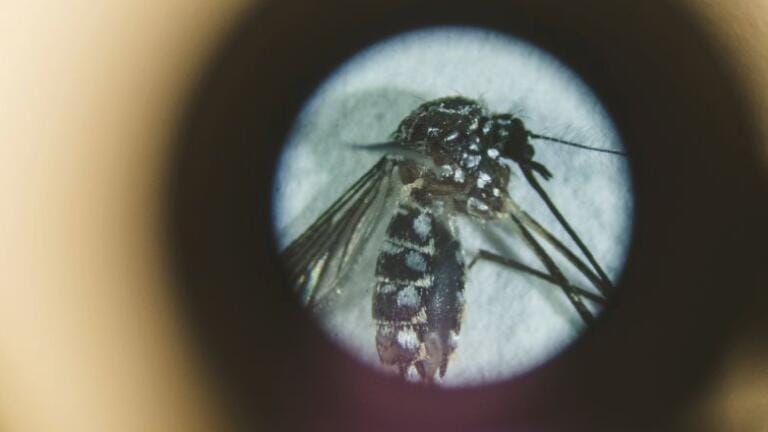
The researchers studied Aedes aegypti, Aedes albopictus – commonly known as the Asian tiger mosquito – and Culex quinquefasciatus, or the southern house mosquito. Collectively, mosquitoes from these species can act as vectors for pathogens responsible for diseases that include yellow fever, dengue, Zika and West Nile disease.
The study, led by doctoral candidate Kaylee Marrero, directly compared how several mosquito species responded to the same group of human participants. This approach allowed the researchers to determine whether people who were particularly attractive to one mosquito species were also likely to attract the others.
“We didn’t expect the species to prefer different people when we started the study,” Marrero said.
“Each species having a distinct microbial signature that they use as a cue was so surprising to me,” she said.
The experiments revealed marked differences between the species. Aedes aegypti, a mosquito that commonly feeds during daylight hours, showed greater attraction towards people who wore no added fragrance and whose skin lacked certain volatile chemical compounds. The researchers also observed a slight preference for male participants compared with female participants.
Aedes albopictus, another predominantly daytime-feeding species, responded differently. It showed greater attraction to elevated concentrations of ketones and to certain plant-like volatile compounds that occur naturally in the chemical mixture emitted from human skin.
The nocturnal Culex quinquefasciatus appeared to rely more heavily on the skin microbiome, the complex community of bacteria, fungi and other microorganisms that inhabit the skin. Particular bacterial families were associated with greater mosquito attraction, while others appeared to reduce the insects’ willingness to approach or feed.
The relationship between microorganisms and human attractiveness to mosquitoes is important because human body odour does not arise solely from compounds produced directly by the body. Microorganisms on the skin metabolise substances in sweat and other secretions and – in the process – produce volatile compounds that contribute to an individual’s characteristic scent.
Human scent itself presents mosquitoes with an exceptionally complicated chemical signal. It contains more than 1,000 volatile organic compounds, many of which remain poorly characterised. Rather than identify one universally attractive combination of these compounds, the researchers found that each mosquito species appeared to extract different information from this complex chemical mixture.
The results therefore indicate that the three species have evolved distinct mechanisms through which to recognise and select human hosts. A person who produces an odour profile that strongly attracts one species may consequently be relatively unattractive to another.
Alongside the mosquito preference experiments, the researchers collected odour and skin microbiome samples from the participants. This allowed the team to determine which volatile compounds and microorganisms were present and at what concentrations, and then to compare those profiles with the mosquitoes’ behavioural responses.
“This connected so well with the differences in skin bacteria and odours. It is clear to me now that our skin microbiomes define our human odour signature. Each species found its own way to decode that signature,” DeGennaro said.
The findings add to evidence that mosquito host selection depends on a sophisticated combination of sensory cues rather than on a simple preference for particular people. Mosquitoes can use carbon dioxide, body heat, moisture and visual information to locate potential hosts, while olfactory signals help them to identify and discriminate between individuals.
Understanding these species-specific preferences could prove particularly valuable because the mosquito species responsible for disease transmission vary considerably between regions. A repellent designed to interfere with the chemical cues used by Aedes aegypti, for example, might not provide equivalent protection against Culex quinquefasciatus if the two species depend on different components of human scent.
By identifying the chemical compounds and microbial signatures associated with attraction or avoidance, the FIU researchers hope to provide a foundation for repellents and public health interventions tailored to the mosquito species of greatest importance in any given region.
For further reading please visit: 10.1016/j.isci.2026.117006
ILM 51.6 Sept 2026




 Product directory