Microscopy & microtechniques
Published over 15 years ago. See the latest and most current information on Microscopy & microtechniques.
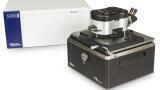
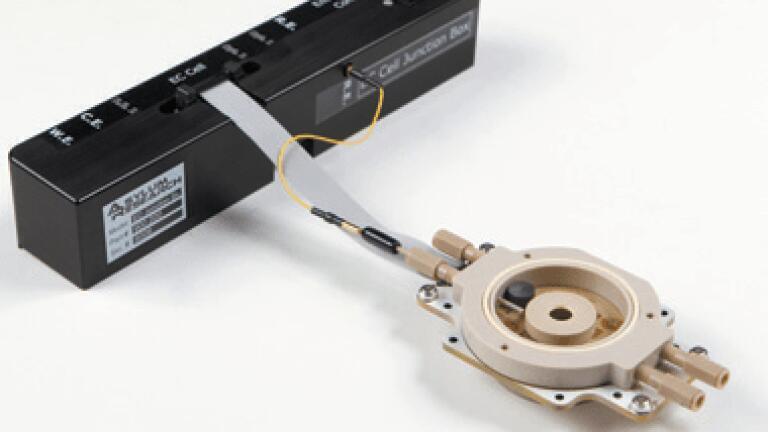
Asylum Research has announced the new Electrochemistry Cell (EC Cell) for its MFP-3D™ AFMs. The EC Cell is a versatile platform for electrochemical experiments combined with AFM imaging. The EC Cell accommodates samples (working electrodes) of various sizes, including metal cylinders, flat conducting samples, and even conducting thin films on insulating substrates, and enables studies of deposition, oxidation, corrosion, and mass transfer of metals and other materials. Nanoscale topographical changes can be precisely monitored in situ as induced by electrochemical reactions. The cell provides for heating from ambient to 60°C (optional) and can be operated in a fully sealed configuration.
Product Manager, Dr Maarten Rutgers, commented: “We developed the EC Cell in collaboration with Prof. Richard Compton of the University of Oxford (UK) to conduct electrochemical experiments and, simultaneously, develop images of the changes occurring to the sample. This new tool is already saving researchers a considerable amount of time and, additionally, allows observation of many processes as they occur.”
ILM 51.6 Sept 2026





 Product directory


.jpg)