The physics of coffee rings have led to the usually unwanted stains making
microtechnique news headlines this week.
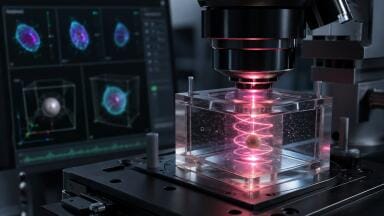
A team from Brown University, the Colorado School of Mines and Harvard University have been studying the formations with a scanning electron microscope.
Their findings were presented this week to the American Physical Society Division of Fluid Dynamics in Long Beach, California.
While coffee stains themselves may not be desirable, the process behind their deposition could prove useful - hence the significance of the study in
microtechnique news stories of the week.
Shreyas Mandre of Brown University says: "Controlling the ring deposition process would be useful for creating such things as new microphysics tools operating at a scale where pliers or other traditional tools for moving particles cannot."
The parameters that help to modify the deposition of particles include surface tension and evaporation.
According to the scientists, particle levels above a threshold limit form uniformly thick layers, whereas below that benchmark periodic bands are created.






 Product directory