Microscopy & microtechniques
Published over 14 years ago. See the latest and most current information on Microscopy & microtechniques.
Scientists have successfully grown human bones from stem cells in a laboratory, which could open up new avenues for medical procedures.
Dr Shai Meretzki, chief executive of Bonus BioGroup, has found a way to grow human bone from stem cells in a laboratory. If following trials are successful, the discovery could lead to new treatments for patients with broken bones, which could be repaired or even replaced with entire new ones grown outside the body from a patient's own cells.
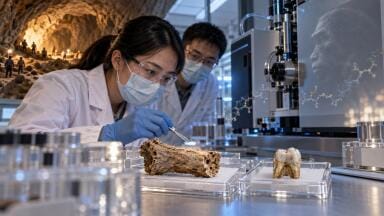
A bone up to a couple of inches long has been grown in laboratory conditions using stem cells taken from fat tissue. The procedure took around one month to grow them into sections of fully-formed living human bone.
There will now be trials on patients which are expected to be conducted later on this year. The Israeli biotechnology company has been working with academics on the technology, which could change medical procedures in the future.
Professor Avinoam Kadouri, head of the scientific advisory board for Bonus BioGroup, said: "There is a need for artificial bones for injuries and in operations.
"We use three dimensional structures to fabricate the bone in the right shape and geometry. We can grow these bones outside the body and then transplant it to the patient at the right time. By scanning the damaged bone area, the implant should fit perfectly and merge with the surrounding tissue. There are no problems with rejection as the cells come from the patient's own body."
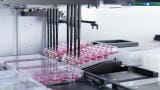
The technology used three dimensional scans of the damaged bone to build a gel-like scaffold that matches the shape. The mesenchymal stem cells are taken from the patient's fat, and then grown into living bone on the scaffold inside a bioreactor.
Ultimately, the technique could open up ways to replace bones that have been smashed in accidents, fill in defects where bone is missing such as cleft palate, or carry out reconstructive plastic surgery.
Posted by Fiona Griffiths
ILM 51.6 Sept 2026




 Product directory


.jpg)