Real-time, full-colour, three-dimensional imaging capabilities could be added to
lab equipment in the not-too-distant future thanks to developments at the University of Arizona.
Scientists at the Tucson-based academic institution have previously been able to transmit single-colour images on to a polymer-based display at a rate of one every four minutes.
However, they have now accelerated the process by over 100 times, to allow monochromatic holograms to update every two seconds.
A slower full-colour version has also been devised using a single-laser system to redraw the holographic image on the polymer surface.
Ultimately,
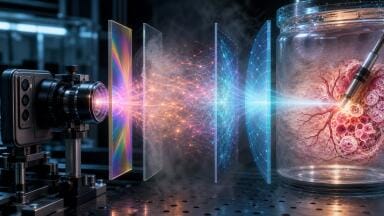
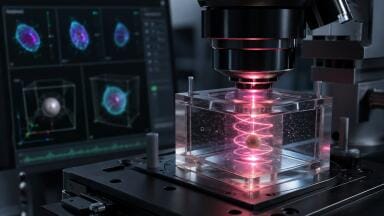
lab equipment with imaging capabilities could be able to offer a three-dimensional view of an object, in full colour, updating at video-like refresh rates.
Nasser Peyghambarian, project lead, says: "This advance brings us a step closer to the ultimate goal of realistic holographic telepresence with high-resolution, full-colour, human-size 3D images."
The discovery comes as the university's Electrical and Computer Engineering Department celebrates its centennial year of groundbreaking research.






 Product directory