One of the
latest microscopy developments could also see invisibility cloaks become reality through the use of gradient index (GRIN) plasmonics.
The technology holds promise for a range of optical applications, including carpet-like cloaks that bend light around an object, rendering it invisible.
However, the
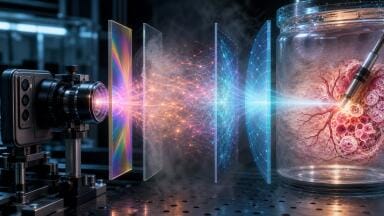
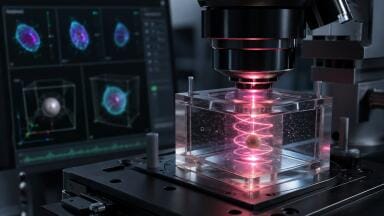
latest microscopy news to come from the Lawrence Berkeley National Laboratory's research into GRIN plasmonics focuses on the technology's ability to resolve DNA molecules at high power levels using visible light.
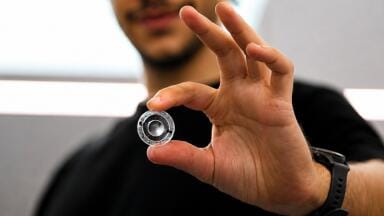
Both Eaton and Luneburg lenses have now successfully been created using GRIN plasmonics.
These allow light to be bent through 90 degrees or focused regardless of its direction of incidence respectively.
Xiang Zhang, research leader at the laboratory, says: "Our GRIN plasmonics technique provides a practical way for routing light at very small scales and producing efficient functional plasmonics devices."
Lawrence Berkeley National Laboratory operates on a set of principles including a sense of urgency, uncompromising safety and a commitment to pioneering science.





 Product directory