One of the
latest microscopy techniques to be developed at JILA, a joint venture of the University of Colorado and the National Institute of Standards and Technology (NIST), aims to make it easier to locate the tiny structures imaged using atomic force microscopy (AFM).
AFM is itself among some of the
latest microscopy methods to go into common usage, offering resolutions 1,000 times better than optical techniques, says NIST.
However, this creates the problem of physically locating the features that are pictured, when they may measure 100 sq nm against the backdrop of an entire human-scale microscope stage.
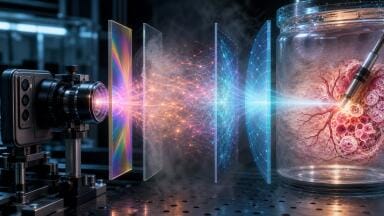
Using laser optics, the researchers claim to have developed a method akin to "the difference between finding the coffee table in a darkened room either by walking around until you fall over it, or using a flashlight".
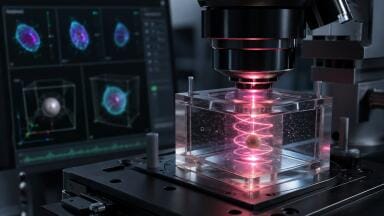
Their solution is to scan the surface of the sample with the same laser used in the AFM imaging, providing a common frame of reference that can locate features to within 40 nm.
JILA was devised in 1961-2 and originally named the Joint Institute for Laboratory Astrophysics, a moniker dropped in 1994 when the organisation refocused on molecular and atomic physics.




 Product directory