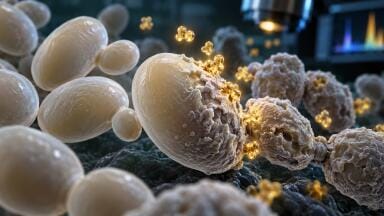
Scientists have discovered that nanoparticles can have a disruptive effect on intracellular transport.
In findings published by the Research Council of Norway, from research by scientists at the Centre of Cancer Biomedicine at the Norwegian Radium Hospital, the team revealed that the uptake and build up of nanoparticles in cells can hinder the transport of vital substances in cells.
Research is currently being undertaken to develop new medicines that target diseased cells and leave healthy ones alone through the use of nanotechnology, however, despite some promising results scientists have found that some reactions negatively affect cell function.
Although it is still not fully understood, scientists believe that a possible reason could be that nanoparticles of a certain size cannot pass through the very thin tubes in the endosomes, causing them to block up.
Senior scientist Tore-Geir Iversen said that people need to avoid jumping to conclusions about targeted medicine until more is known about the role of nanoparticles.
"We find it frustrating that a number of international scientific articles confidently conclude, on poorly-verified grounds, that nanoparticles effectively transport medicines to the nucleus," he said.





 Product directory