Scientists at the University of Tubingen have revealed the
latest microscopy development.
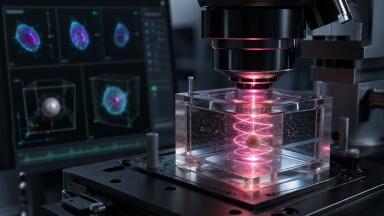
Researchers from the institution have created a suspended tip on a scanning probe microscope made from an ultra-cold, dilute[d?] gas of atoms.
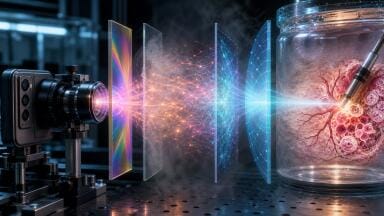
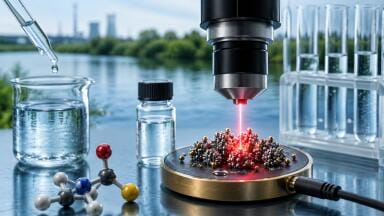
Recent developments in microscopy have surpassed the optical lens in favour of a needle-like tip which probes objects, reacting to small variations and allowing for investigation on a nano-scale.
These tips have been made from a solid material until now but the work, led by Professor Jozsef Fortagh, head of the Nano-Atom-Optics group, and his co-worker Dr Andreas Gunther, made the atom tip which will allow for far greater levels of accuracy.
Published in the Nature Nanotechnology Journal, the study saw scientists cool an especially pure gas of rubidium atoms to a temperature less than a millionth of a degree above absolute zero, creating a single 'super atom'.
"The extreme purity of the probe tip and quantum control over the atomic states in a Bose-Einstein condensate open up new possibilities of scanning probe microscopy with non-classical probe tip," the scientists concluded.




 Product directory