Microscopy & microtechniques
Published over 8 years ago. See the latest and most current information on Microscopy & microtechniques.
Memories are incredibly complex things. Sometimes they can spark a feelgood glow and other times they can trigger extreme reactions like post traumatic stress disorder. Every person has a unique collection of memories, yet little is known about why some linger, some fade away and others are lost altogether.
While the early years of life are arguably the most formative, research suggests that childhood memories begin to fade at the age of seven. The phenomenon is known as “childhood amnesia" and was first coined by Sigmund Freud. Today, researchers are continuing to unravel the mysteries of early childhood memories and shed new insight on the human experience.
At birth, the brain of a baby contains roughly 86 billion neurons. They use these complex neural pathways to absorb information, with the brain forming up to 1000 new synaptic connections per second. While the speed of the learning process is incredible, it could also be its demise.
In a simple yet telling experiment, a team of researchers placed adult and baby mice in cages and administered mild electric shocks. Unsurprisingly, both sets of mice experienced a fear response when placed back in the cages. However, while the fear endured in adult mice the babies began to lose their sense of distress after one day. The team then placed the adult mice on a wheel to stimulate hippocampal neurogenesis, aka the formation of new neurons in the brain. Amazingly, this triggered an infant amnesia response in the adult mice.
The process also works in reverse, with the baby mice able to form more stable memories after the scientists used genetic engineering and drugs to hinder neurogenesis. After marking newly formed brain cells with a fluorescent tag, the team found that instead of being replaced, the memories were simply being modified. This suggests that infant amnesia could be caused not by memory loss, but by memory transformation.
It's a complex puzzle, with other experts hypothesising that infant memories linger yet are inaccessible due to a loss of neural connections known as "synaptic pruning". Other scientists suggest emotions could play a key role in memory loss, with West and Bauer musing that early memories often fade away because infants are unable to contextualise meaning and therefore attribute importance.
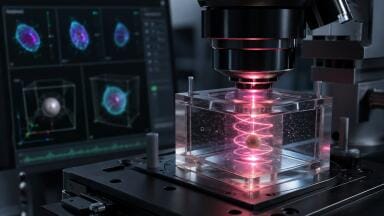
From analysing hippocampal neurogenesis in mice to analysing early memories in children, microscopy plays a pivotal role in supporting advanced cognitive research. For a closer look at the latest technologies don't miss 'MICROTEC – In the Spotlight
Cost-effective light microscopy solutions'
ILM 51.6 Sept 2026




 Product directory


.jpg)
.jpg)