Microscopy & microtechniques
Published over 14 years ago. See the latest and most current information on Microscopy & microtechniques.
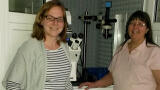
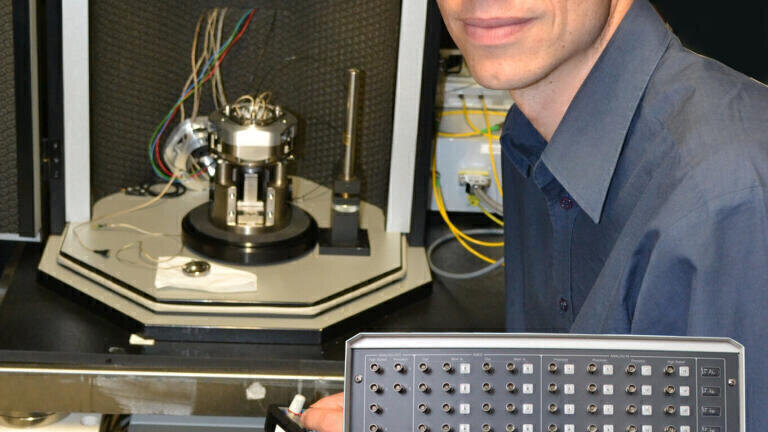
Lecturer at the London Nanotechnology Centre and the Department of Physics and Astronomy, University College London, Dr Bart Hoogenboom's main research interest is where nanotechnology tools may be used to study and manipulate single biomolecules. Specifically, he applies AFM as the only instrument that provides ~1 nm spatial resolution on large biomolecules that are still functional and may be studied in the natural environment. This means that AFM can visualise biological processes while they happen, at the scale of single molecules.
Dr Hoogenboom's laboratory collaborates with JPK to look at ways to push instrumentation to new limits of resolution and imaging. While having selected JPK's NanoWizard® AFMs for biological imaging because of their user-friendliness, they also help to achieve higher throughput for their experiments. Dr Hoogenboom continued: "An additional advantage is their compatibility with inverted optical microscopes, which make it easy to get larger-scale images of what we are watching at the nanoscale. For experiments at higher spatial and time resolution, we also use home-built microscopes. While using these microscopes, we benefit from our joint project with JPK, where JPK has provided us with their latest AFM ‘Vortis’ controller and continues to give us technical support in pushing the limits of our (and their) instrumentation."
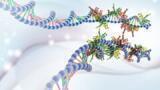
This has resulted in a recent publication in Nano Letters which reported on the first visualisation of the DNA double helix in water. The paper may be found online at http://j.mp/QdVNk8.
Dr Hoogenboom explained the significance of his work. "The resolution obtained on DNA is an example of our success in extending the capabilities of AFM instrumentation. Most present-day microscopes do not achieve any higher resolution on DNA than was achieved with the first AFM experiments in the early 1990s. There are a few earlier reports of observations of the periodicity of the DNA helix along its longitudinal axis. The distinctive feature of our recent results is the visualisation of both DNA strands in the double helix. It is not new that DNA is a double helix, but about 60 years after its discovery, it is the first time that we see it in the molecule's natural, aqueous environment."
ILM 51.6 Sept 2026


 Product directory


.jpg)