Microscopy & microtechniques
Published over 15 years ago. See the latest and most current information on Microscopy & microtechniques.
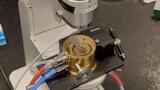
Linkam Scientific Instruments announce the use of their THMS600 temperature stage at the Leiden University Medical Centre to aid the cryo-study of biological specimens. Professor A.J. Koster (Leiden University Medical Centre) is one of the founders of NeCEN - the Netherlands Centre of Electron Nanoscopy. Professor Koster’s own group focuses on applications in cell biology. His goal is to localise molecular structures in cells using fluorescence microscopy and then transfer the sample to a cryo-electron microscopy (Cryo-EM) set up to image the corresponding macromolecular structures in 3D with nm-scale resolution. Two areas are of particular interest: the study of viral infections and viral replication where fluorescence may be used to pinpoint areas worthy of enhanced investigation. The other is in the field of vascular biology to study the process of regulated exocytosis of Weibel-Palade bodies (WPBs) that is a pivotal mechanism via which vascular endothelial cells initiate repair in response to injury and inflammation.
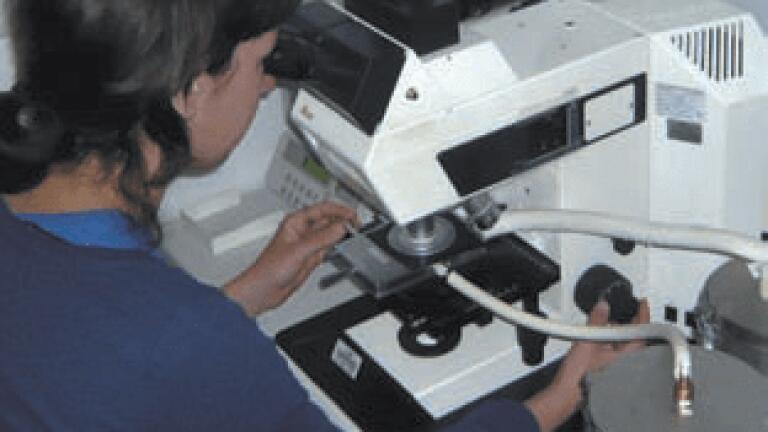
The goal of the studies was to develop a setup and workflow for cryo-CLEM (correlative light and electron microscopy) that permits visualisation of structures in cryo-FM (fluorescence microscopy) at sub-cellular resolution, and that retrieves those structures accurately in cryo-EM for the purpose of cryo electron tomography. The group wanted a cryo-FM setup that was easy to implement. To this end, Professor Koster and his colleagues opted for a commercially
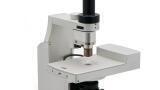
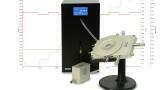
available heating and freezing stage (the Linkam THMS 600), which was modified in order to accommodate EM support grids. More than 3,000 THMS600 stages are in use in laboratories worldwide. It is used in many applications where high heating/freezing rates and 0.1°C accuracy and stability are needed. Samples can be quickly characterised by heating to within a few degrees of the required temperature at a rate of up to 150°C/min with no overshoot, then slowed down to a few tenths of a degrees per minute to closely examine sample changes.
ILM 51.6 Sept 2026



 Product directory