Microscopy & microtechniques
Published over 13 years ago. See the latest and most current information on Microscopy & microtechniques.
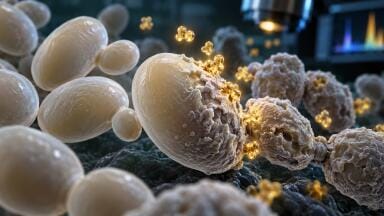
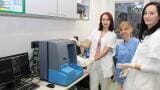
Ilya Kurochkin is Professor and Head of the Laboratory of Postgenomic Chemistry in the Department of Chemistry at the Lomonsov Moscow State University. His research requires characterisation of size distribution, concentration and to identify the presence of certain epitopes in two areas: exosomes for the prediction of adverse outcomes in patients with chronic heart failure and for the characterisation of gold, silver and metal oxide nanoparticles in the development of new electrochemical biosensors and nanobioanalytical systems based on nanoplasmonic structures.
In the research, it is important to be able to make a quick calculation of the number and estimate the size distribution of the exosomes in the biological fluids. The use of plasmonic nanoparticles will allow multiplex analysis of a large number of target proteins in exosomes. These measurements provide information about a specific protein composition of exosomes, and thus make it the basis of a new nanobioanalytical platform – ‘human exosome profile’.
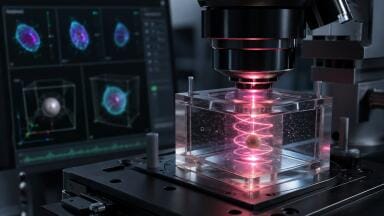
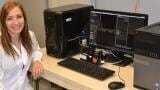
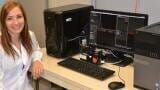
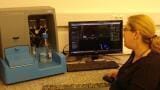
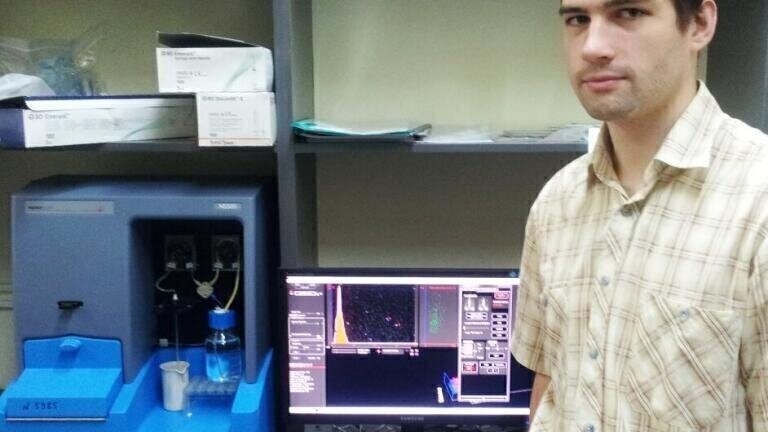
To achieve this, Professor Kurochkin chose Nanoparticle Tracking Analysis, NTA, as his preferred technique as he needed accurate information on the size and number of his nanostructures in the presence of much larger particles. Prior to NTA, he used a combination of techniques including dynamic light scattering, atomic force microscopy and electron microscopy. As he noted, "The main benefit of the NTA is the ability to accurately measure size distribution for nanostructures in the presence of much larger particles directly in test solutions. The fact that the intensity of light scattering is proportional to the particle diameter to the power of 6, DLS (which captures the signal from all the particles in the sample mixture) does not give an accurate measurement of a particle with a small diameter in the presence of particles with a larger diameter. NTA captures the trajectories of individual particles and therefore the ratio of the particle size does not affect the accuracy of the analysis. Thus, the fact that NTA measures each particle separately is very important. I am particularly excited that I can measure my exosomes with specific antigens using fluorescent tags and plasmonic nanomarkers (gold or silver nanoparticles). Using NTA perfectly overcame the earlier experimental problems of my work. Measurements are rapid and by counting particle by particle, I achieved the level of accuracy I was seeking."
ILM 51.6 Sept 2026





 Product directory


.jpg)