

Microscopy & microtechniques
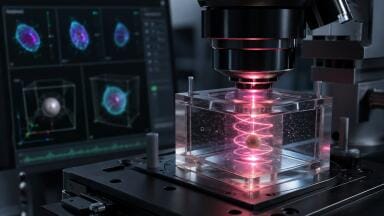
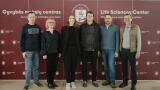
Vilnius University (VU) Life Sciences Center scientists, Dr Greta Leonavičienė and Professor Linas Mažutis, have developed cutting-edge semi-permeable capsule (SPC) technology, revolutionising single-cell analysis and multi-omics research. Their discoveries have already led to a $25 million Series A investment in biotech startup Atrandi Biosciences, which is now commercialising these advanced tools for global laboratories.
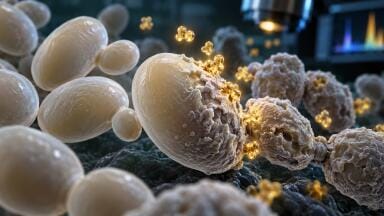
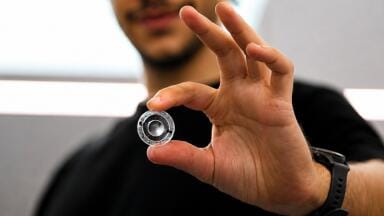
SPC technology enables precise, reproducible encapsulation of individual cells, allowing controlled biochemical reactions at the microscale. While the theoretical principles rely on two polymer solutions phase-separating into a core/shell structure, the practical challenge was immense: optimising polymer molecular weights, densities, fluorinated oils, and other parameters to ensure stable capsules and reliable single-cell retention. “We established conditions that allow reproducible capsule formation and controlled reactions, opening new possibilities for both research and industry,” explained Professor Mažutis.
Dr Leonavičienė added that the technology is already simplifying workflows for single-cell and multi-omics experiments, enabling researchers to perform complex analyses with greater efficiency and accuracy. These innovations have not only advanced fundamental research but also positioned Atrandi Biosciences as a global leader in SPC applications, with patented solutions now used in over 200 laboratories worldwide.
The VU team emphasised that while academic research lays the groundwork, commercialisation requires a supportive biotech ecosystem. Atrandi Biosciences, founded by alumni and researchers trained at VU LSC, bridges this gap by bringing laboratory innovations to real-world applications. This year, the company is expanding into Boston, continuing to refine SPC technology and expand its use in both academic and industrial settings.
“Our environment at Vilnius University encourages fundamental research without immediate commercial pressures, but the real-world impact of our work becomes clear as technologies like SPC are adopted internationally,” noted Professor Mažutis. The story of Atrandi Biosciences illustrates how careful, high-precision microtechniques research can translate into both scientific breakthroughs and tangible commercial success, benefiting labs and industries around the world.
More information online
ILM 51.6 Sept 2026



 Product directory


















.jpg)
