
Research news
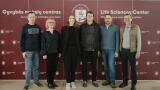
Researchers at the Life Sciences Center of Vilnius University have developed a microscopy-based method that allows scientists to observe how individual proteins interact with DNA in real time, offering a clearer view of the molecular events that drive life.
The technique [1], described in FEBS Open Bio, was developed through a project funded by the Research Council of Lithuania. It enables DNA–protein interactions to be studied at the level of single molecules using advanced fluorescence microscopy.
DNA–protein interactions underpin many fundamental biological processes. They determine whether genes are switched on or off, enable DNA damage to be detected and repaired, and ensure that genetic information is faithfully passed on. However, studying these processes in detail can be challenging because many traditional biochemical methods measure the average behaviour of enormous numbers of molecules at once.
Dr M. Tutkus, the study’s principal investigator, explained that this can obscure what is happening at the level of individual molecular complexes.
“When trillions of molecules are analysed together, we only see their average behaviour,” he said. “Single-molecule approaches allow us to observe what actually happens within a particular DNA–protein complex – when a protein binds, how long it remains attached, and whether it moves along the DNA strand.”
The method developed by the Vilnius team uses a DNA flow-stretch system. Long DNA fragments are immobilised on a glass surface, labelled with fluorescent dyes and stretched inside a specialised flow channel using liquid flow. This aligns the DNA molecules so they can be visualised using total internal reflection fluorescence microscopy.
Stretching the DNA strands enables researchers to observe molecular interactions along the length of individual molecules with high spatial precision.
A crucial part of the approach lies in preparing the glass surface used to anchor the DNA. The researchers optimised the surface chemistry to ensure the DNA remains securely immobilised while minimising the unwanted attachment of proteins to the glass.
The publication provides a detailed protocol covering each stage of the process, from preparing DNA fragments and attaching molecular tags such as biotin or digoxigenin, to immobilising the DNA at both ends and labelling it with fluorescent dyes. According to Dr Tutkus, sharing these details was an important goal of the work so that other laboratories can adopt the technique more easily.
The project also involved international collaboration. Compounds used to modify the glass surface were developed with Professor Chun-Jen Huang’s research group in Taiwan, which specialises in synthesising functional silatranes capable of forming stable molecular layers on glass. These compounds help repel unwanted protein binding while allowing DNA molecules to be securely attached.
The method has already been used to study interactions between DNA and proteins involved in CRISPR-Cas gene-editing systems, an area closely associated with the work of Professor Virginijus Šikšnys at Vilnius University.
According to the researchers, improving tools for observing molecular behaviour at the single-molecule level could support both fundamental biological research and biotechnology applications. Over time, approaches such as this may become widely used tools for studying DNA-interacting proteins and developing new gene-editing technologies.
More information online
ILM 51.6 Sept 2026



 Product directory



















,-photo-Karin-Allander.jpg)







.jpg)
