News
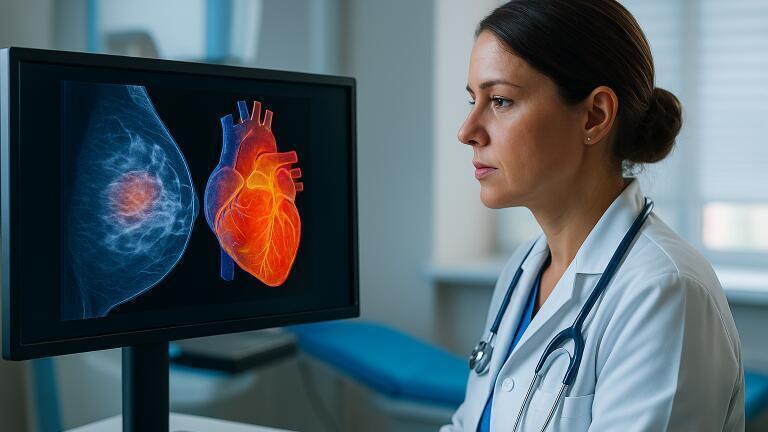
A research team from institutes across Sydney, Australia has developed a deep learning algorithm that uses mammograms and age as the only data points to predict cardiovascular risk in women with accuracy comparable to standard calculators
A deep learning algorithm which has been developed by The George Institute for Global Health, in Sydney, Australia has successfully predicted cardiovascular risk in women by analysing their mammograms.
Created in collaboration with the University of New South Wales and the University of Sydney, this is the first model to rely solely on mammographic features and age to predict major cardiac events with accuracy comparable to traditional cardiovascular risk calculators.
“It’s a common misconception that cardiovascular disease predominantly affects men, resulting in underdiagnosis and undertreatment of the condition in women.
“By integrating cardiovascular risk screening with breast screening through the use of mammograms – something many women already engage with at a stage in life when their cardiovascular risk increases – we can identify and potentially prevent two major causes of illness and death at the same time,” said Associate Professor Clare Arnott, global director of the cardiovascular programme at The George Institute.
The model was trained and validated using routine mammograms from The Lifepool cohort which has created a database of more than 49,000 women* mostly in metropolitan and rural areas of Victoria, Australia, and linked to individual hospital and mortality records. Researchers compared the results with conventional models that require multiple clinical data points, including blood pressure and cholesterol.
“We found that our model performed just as well without the need for extensive clinical and medical data,” said Professor Arnott.
Previous studies had focused on mammographic features such as breast arterial calcification (BAC), which has been associated with cardiovascular risk in certain populations.1 However, BAC alone has its limitations and becomes less accurate women age.1
“Our model is the first to use a range of features from mammographic images combined simply with age.
“A key advantage of this approach being that it does not require additional history taking or medical record data, making it less resource intensive to implement, but still highly accurate,” Professor Arnott added.
Globally, cardiovascular disease remains the leading cause of mortality in women, responsible for around nine million deaths each year, or approximately one third of all female deaths.2 Despite these outcomes, international studies have shown that cardiovascular symptoms and risk factors in women are often under-considered, leading to fewer diagnostic tests, specialist referrals and prescriptions compared with men.3
By contrast, mammography-based screening programmes achieve strong engagement, with more than 67% of women in both the United States and the United Kingdom taking part.4,5
“Leveraging an existing screening process already widely utilised by women means this model could serve as a cardiovascular risk prediction tool for women in diverse communities across Australia and internationally.
“We hope this technology will one day provide greater, and more equitable, access to screening in rural areas, as many women already benefit from mobile mammography units free of charge,” said Dr Jennifer Barraclough, a research fellow at The George Institute.
“We have shown the potential of this innovative screening tool, so we now look forward to testing the model in additional, diverse populations and understanding potential barriers to its implementation,” she concluded.
For further reading please visit: 10.1136/heartjnl-2025-325705
References
1. Allen TS, Bui QM, Petersen GM, Mantey R, Wang J, Nerlekar N, et al. Automated Breast Arterial Calcification Score Is Associated With Cardiovascular Outcomes and Mortality. JACC: Advances. 2024;3(11):101283. https://doi.org/10.1016/j.jacadv.2024.101283
2. Di Cesare M, et al. The heart of the world. Global heart. 2024. https://doi.org/10.5334/gh.1288
3. Al Hamid A, et al. Gender Bias in Diagnosis, Prevention, and Treatment of Cardiovascular Diseases: A Systematic Review. Cureus. 2024. https://doi.org/10.7759/cureus.54264
4. Centers for Disease Control and Prevention. Health, United States, 2020-2021: National Center for Health Statistics; 2021. Available from: https://www.cdc.gov/nchs/hus/topics/mammography.htm#:~:text=The%20age%2Dadjusted%20percentage%20of,within%20the%20past%202%20years
5. S. Deandrea, A. Molina-Barceló, A. Uluturk, J. Moreno, L. Neamtiu, et al. Presence, characteristics and equity of access to breast cancer screening programmes in 27 European countries in 2010 and 2014. Results from an international survey. Preventive Medicine. 2016;91:250-263. https://doi.org/10.1016/j.ypmed.2016.08.021
* The Lifepool cohort was established by the Peter MacCallum Cancer Centre, the University of Melbourne, and the Royal Melbourne Hospital, with participants recruited from Breast Screen sites across metropolitan and rural areas. It was established in 2009 and has enrolled 54,000 women.
ILM 51.6 Sept 2026



 Product directory





























.jpg)
