News
Published over 10 years ago. See the latest and most current information on News.
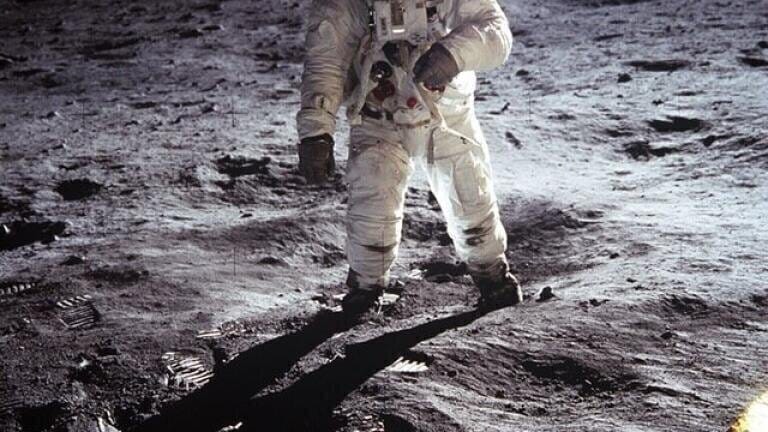
On earth, even though we don’t necessarily realise it, we have it pretty good. Our atmosphere provides the ideal conditions for us to live in. In space, on the other hand, you need a space suit to protect you from the different environment. What exactly is it, though, that makes space unsuitable for us? What would happen in space, if you didn’t have a spacesuit?
The Earth’s atmosphere contains an abundance of oxygen. In contrast, space has a lack of it. Without oxygen you wouldn’t be able to breathe and would become unconscious after about ten seconds. Unfortunately, even trying to hold your breath, to keep all your oxygen in, wouldn’t work in space. In fact, it would be worse. The lack of pressure would cause the air inside you to expand and rupture your lungs.
In a low pressure environment like space, the boiling point of your body’s fluids becomes much lower. It becomes lower than your body’s temperature, in fact. The body’s skin and outer organs prevent the inside of your body from ‘boiling’, but you would swell quite considerably. Gas bubbles would form in your bodily fluids as the liquid converts to gas, which is known as ebullism. This will cause a lot of pain and problems with blood flow and your heart rate.
The molecular oxygen in the Earth’s atmosphere blocks out the majority of the sun’s UV rays. In space, however, the unblocked UV rays would give you incredible sunburn. This isn’t anything like the relatively minor sunburn you would get even in the hottest parts of Earth. Within seconds you would be burnt and it would be so severe that it would even destroy your DNA and cause mutations.
The answer, in short, is that you would probably die within the first 2 minutes of being in space without a spacesuit. The lack of oxygen would be the primary cause. The burns, mutations and swelling would simply be additional inconveniences. Although given the time, they would also eventually lead to death.
Despite its comparative insignificance in this case, UV light is extremely powerful. Light Source Characterisation in Life Sciences reviews the role of photonics in life sciences. Photonics is concerned with the transmission of photons – the science of light. Understanding light sources can help achieve several goals in life sciences.
ILM 51.6 Sept 2026




 Product directory