News
Published over 11 years ago. See the latest and most current information on News.
In the early hours of Tuesday 27th January, asteroid 2004 BL86 will pass within 745,000 miles of the Earth’s surface. The distance is roughly equivalent to three times the distance between ourselves and the Moon, and while it’s far enough away that we can breathe easy in the knowledge it won’t affect our planet, as we discussed in this update: Will Asteroid 2004 BL86 Hit Earth? But it is close enough to offer a unique stargazing moment.
Often when it comes to viewing intergalactic phenomenon, incredibly powerful radio telescopes are needed. This is certainly the case with the distant black hole 3C196 quasar, which required a network of European telescopes to be viewed with any clarity; the 2011 story is discussed in more detail in this article: Giant Radio Telescope Goes Multi-National. Thankfully, however, such sophisticated and high-end equipment will not be necessary for viewing 2004 BL86.
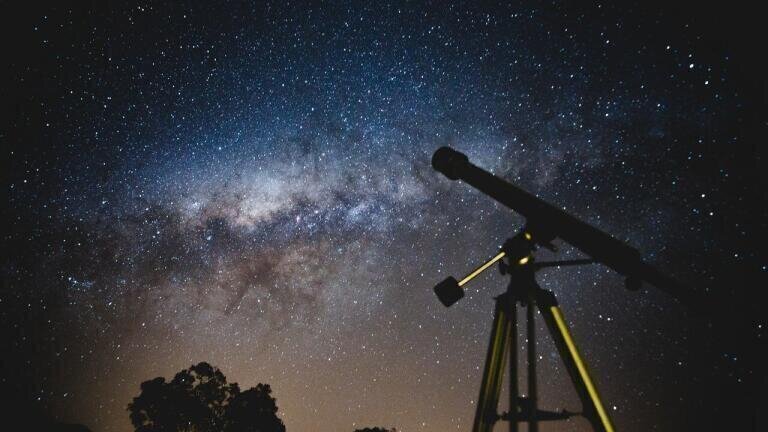
Instead, amateur astronomers will be able to view the asteroid with the aid of a small telescope, or even just using large binoculars. Since it is expected to reach a magnitude of +9.0 brightness, it will be visible even using a telescope as short as three inches long. This is because of its relatively close proximity and its gargantuan size.
The rock is around 680m (2,230ft) in diameter and is thought to be larger than the Empire State Building in terms of total mass. However, little is known about what it looks like or what it is composed of until this point. Because of this, scientists are hoping to use the stargazing opportunity to ping microwaves off the asteroid and learn about its constitution via the reverberations.
The asteroid will be best viewed from those in Europe, Africa and the Americas on the early morning of the 27th January. Between 1am and 6am GMT is when the asteroid will burn brightest, passing through the Cancer constellation of the Crab, not far from the planet Jupiter. It is also due to swing by the well-known Beehive Cluster (M44) between 5am and 6am.
The half-moon is also due to shine this early morning, but it should be located at a more westerly position, meaning it won’t obstruct stargazing enthusiasts’ view of 2004 BL86. Although this is the brightest time the asteroid will be visible, it will also be possible to see it in the southern hemisphere on January 24th, or in the northern hemisphere on January 29th. However, it will only reach a magnitude of +13.0 at best on these particular dates, so Tuesday morning is your best bet to see the intergalactic body.
ILM 51.6 Sept 2026





 Product directory


.jpg)