News
Published over 9 years ago. See the latest and most current information on News.
It delivers nutrients and oxygen to tissues and cells around the body and makes up 7% of its volume. Blood is an essential part of how your body works. Without blood, your body simply wouldn’t work, so you can see why losing too much blood can be fatal. But what about gaining blood – not by transfusion, but by drinking it?
We know this isn’t a quick way to replace lost blood, of course, but is it a safe thing to be doing? It’s the drink of choice for vampires – they need it survive, or so the story goes. There have been some cases where humans do drink blood too, both consensual and not. And let’s not forget, it’s a key ingredient in some foods – British black pudding, Polish Czarnina (duck blood soup) and Nordic Blodplattar (blood pancakes). So is it actually safe to drink blood?
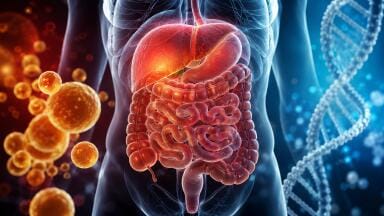
Blood is very rich in iron, and the human body has difficulty getting rid of excess iron. Put the two together and you have a bit of a tricky situation, namely iron overdose. Iron is necessary for humans. We need a certain amount to produce red blood cells which carry oxygen around the body. Too much iron results in a condition called hemochromatosis, which can cause the following problems:
Some animals, like vampire bats, require a high level of iron intake. They can digest high levels of blood and when they do take in too much iron, their body is fully equipped to get rid of the excess.
As well as the iron overload, drinking blood is dangerous simply because it can spread disease. There are a number of blood-borne diseases that would potentially be spread by drinking blood. Hepatitis B, Hepatitis C and HIV are all diseases that could be contracted through ingesting infected blood. So it’s safe to say, as a general rule – do not drink blood.
[[Pr:54096:2021-07-30]
Blood is a vital part of how your body functions. It’s also a very sophisticated substance. The process of coagulation – also known as clotting – is when your blood turns to a gel to stop bleeding. It’s a critical process, but in some cases blood can clot too strongly (thrombosis), or too weakly (spontaneous bleeding). ‘Speeding up Research into Clotting and Bleeding’ explores the research into blood coagulation, including thrombin activity and fibre activity.
ILM 51.5 July 2026



 Product directory


.jpg)
.jpg)








-(1).jpg)