News
Published over 13 years ago. See the latest and most current information on News.
Researchers have developed a prototype ultra-sensitive sensor that would allow doctors to discover early stages of diseases and viruses with their naked eye.
The new visual sensor technology is ten times more sensitive than the current gold standard techniques for measuring biomarkers, according to research published in the journal Nature Nanotechnology by a team from the Imperial College London.
Able to detect infection by viruses such as HIV and diseases such as prostate cancer, the researchers said that their sensor would benefit poorer countries in particular, where sophisticated detection equipment is in short supply.
The sensor would allow cheaper and simpler detection for patients.
Dr Roberto de la Rica, co-author of the study from the Department of Materials at the university, adds: "We have developed a test that we hope will enable previously undetectable HIV infections and indicators of cancer to be picked up, which would mean people could be treated sooner."
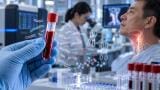
The effectiveness of the sensor was tested by detecting a biomarker called p24 in blood samples, which signifies infection with the HIV virus.
Blue was positive for the infection and red was negative. The prototype sensor makes visual recognition of results easy and effective.
Samples for the biomarker named Prostate Specific Antigen (PSA) –which is an early indicator of prostate cancer - were also successfully tested by the sensor.
Scientists from the study state that the new technology can also be reconfigured to detect other viruses and diseases where the particular biomarker is known.
The team also discovered that the sensor was so sensitive, it was able to detect minute levels of p24 in samples where patients had low viral loads and are not currently being diagnosed using existing tests such as the nucleic acid based test and the Enzyme-linked Immunosorbent Assay test.
The following stage of the research will see the team approaching not-for-profit global health organisations, which could supply financing for manufacturing and distributing the technology to low income nations and advise on strategic direction.
Posted by Ben Evans
ILM 51.6 Sept 2026


 Product directory


















.jpg)
,-photo-Karin-Allander.jpg)