News
Two-year collaboration will test quantum chemistry algorithms on simulators and quantum hardware to address molecular simulation bottlenecks in drug discovery
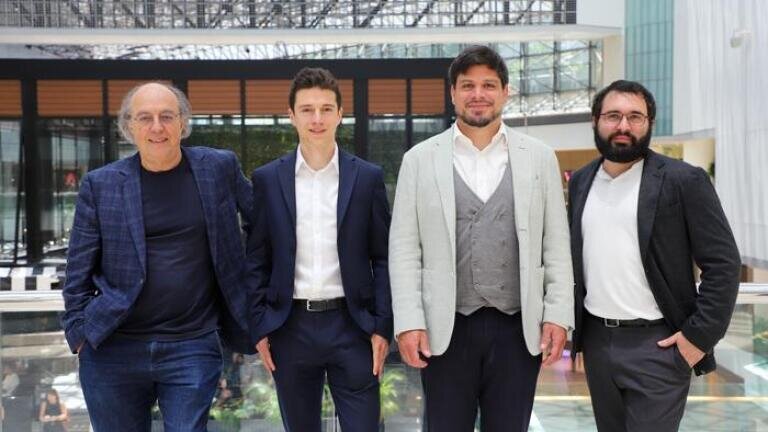
Qubit Pharmaceuticals (Qubit) has announced a two-year strategic research collaboration with the Centre for Quantum Technologies (CQT) in Singapore to develop and apply novel quantum algorithms for molecular discovery, with the aim to move advanced quantum chemistry methods closer to practical use in drug discovery. Qubit is based at the Santé Cochin dedicated healthcare incubator in Paris, France.
The collaboration combines Qubit’s expertise in quantum chemistry and molecular sampling with the CQT’s strengths in quantum computing, circuit design and experimental implementation. The partners said the programme would focus on algorithms intended to address key computational bottlenecks in drug discovery, particularly the need to predict molecular properties more accurately and to simulate complex chemical systems more efficiently.
The teams have begun to design and test quantum chemistry algorithms, including variational quantum eigensolvers, quantum phase estimation and quantum Markov chain Monte Carlo (qMCMC) sampling. These approaches are intended to assess whether quantum computers can support more accurate molecular simulations than conventional methodologies, especially for systems in which electronic structure and molecular behaviour are difficult to model at high fidelity.
“Quantum algorithms for chemistry have been studied for decades, but real implementations remain rare,” said Dr. Robert Marino, chief executive officer of Qubit.
“By working with CQT and leveraging access to [its] state-of-the-art quantum hardware, we aim to transition these algorithms from theoretical constructs into real computational tools for molecular discovery,” he said.
“Recent progress in quantum hardware is exciting. We want to match this pace in developing quantum algorithms. We are glad to partner with domain experts like Qubit to show what quantum computers can do for problems people care about,” said Dr. José Ignacio Latorre, director of the CQT and Provost’s Chair professor at the National University of Singapore’s Department of Physics.
The researchers aim to determine whether quantum algorithms can approach the highest level of accuracy in molecular simulations while potentially offering quadratic or even exponential computational advantages over classical approaches. The team will first validate its algorithms on quantum simulators before it deploys them on quantum hardware, a staged approach intended to test both theoretical performance and practical feasibility.
The project has been supported by Singapore’s National Quantum Computing Hub. Through the Hub, CQT researchers have gained access to run experiments on Quantinuum’s quantum systems, including the H2 and Helios systems.
Marino and Baptiste Claudon presented the first experimental results on 23 April at a Quantum Industry Day in Singapore, organised by Quantinuum and Singapore’s National Quantum Office for about 250 invited participants. The team has implemented the qMCMC algorithm and tested several encodings. Qubit said this represented the first deployment of this type of algorithm to quantum hardware.
The collaboration has been led by Dr. Jean-Philip Piquemal at Qubit and Sergi Ramos-Calderer at the CQT, with an initial team of four researchers across both organisations. Further researchers are expected to join as the programme expands.
“Through our collaboration with Quantinuum, we have the opportunity to test quantum algorithms on some of the best gate-based quantum machines available today,” said Ramos-Calderer.
“Algorithm design must move hand-in-hand with hardware improvements, and this work is a meaningful step in this direction,” he added.
“Drug discovery is fundamentally a molecular simulation challenge. If we can model chemistry with greater fidelity and efficiency, we can make better decisions earlier in the pipeline,” said Piquemal, chief scientific officer and co-founder of Qubit.
“This collaboration allows us to rigorously test whether quantum algorithms can move from scientific promise to practical utility on problems that matter,” he said.
In the longer term, the team aims to generate molecular simulation data directly through quantum algorithms and to integrate these capabilities into future drug discovery workflows. The partners said such work could support earlier and more accurate decisions on candidate molecules, particularly where conventional modelling struggles to capture complex chemical interactions.
Qubit was founded in 2020 to co-develop safer and more effective drugs with pharmaceutical and biotechnology partners. The company uses its Atlas platform to discover drug candidates through molecular simulation and modelling, accelerated by hybrid high-performance computing and quantum computing.
For further reading please visit: 10.48550/arXiv.2603.08395
ILM 51.6 Sept 2026





 Product directory



























.jpg)