Research news
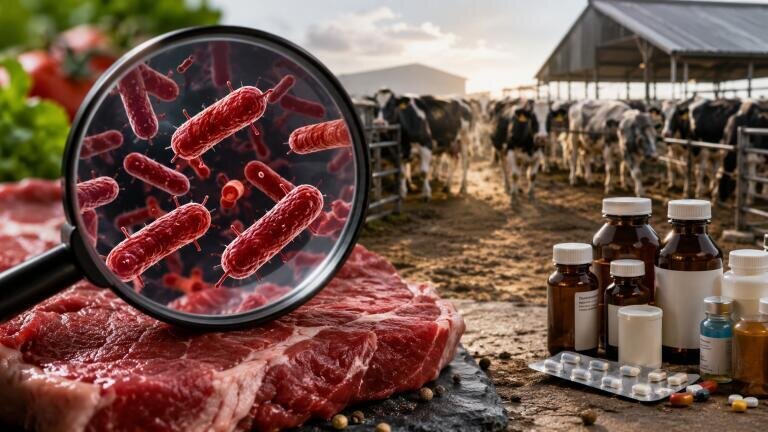
Surveillance data from nearly 2,000 infections in the USA has shown a steady rise in resistance among Shiga toxin-producing Escherichia coli O157, despite antibiotics not usually being recommended for these foodborne infections
Antimicrobial resistance (AMR) has increased among human infections caused by Shiga toxin-producing Escherichia coli ( E. coli) bacteria, according to a study of nearly 2,000 infections reported in the USA between 2010 and 2021.
The research has pointed to the need for even stronger antibiotic stewardship across the food production chain, as well as in human healthcare, because resistant foodborne bacteria can move between people, animals and the environment.
“Shiga toxin-producing E. coli is a type of foodborne bacteria that can cause anything from mild diarrhoea to very serious illness.
“About 100,000 people in the USA get sick from this strain each year, and some end up in the hospital,” said study leader Dr. Csaba Varga, professor of epidemiology at the University of Illinois Urbana-Champaign based in Champaign, Illinois, USA.
“The biggest concern is for children under five years of age, who are more likely to develop serious complications, such as kidney failure,” he added.
Shiga toxin-producing E. coli (STEC) includes strains of E. coli that produce Shiga toxin, a potent toxin that can damage cells lining the intestine and – in severe cases – contribute to haemolytic uraemic syndrome. This complication can cause acute kidney failure and is a particular concern in young children, older adults and people with weakened immune systems.
Professor Varga and graduate student Tarjani Bhatt used data reported by the US Centers for Disease Control and Prevention which collects information through a national surveillance system across the USA. The researchers focused on E. coli O157, a strain associated with many severe STEC infections. They examined 1,995 bacterial samples collected between 2010 and 2021 to assess whether AMR changed over time and whether resistance showed patterns by age group or geographical region.
“Most of the previous studies have looked at snapshots in time, not how resistance changes year by year. We didn’t have a clear picture of long-term trends, whether AMR was increasing, decreasing or staying the same,” said Varga.
“Resistance doesn’t stay in one place; it moves through people, animals and the environment. Our study helps fill those gaps by looking at when, where and in whom resistance is emerging over time,” she said.
The team found while overall AMR remained low that resistance had increased steadily across the period studied. The clearest increases were seen for tetracycline and sulfisoxazole, two established antimicrobial agents that have long been used in both human and veterinary contexts. The researchers also found that resistance varied by region and age group, with adults in their 20s and 30s most likely to have infections resistant to some antibiotics.
One of the most striking aspects of the study was that antibiotics are not usually recommended for Shiga toxin-producing E. coli infections. Although antibiotics can kill the bacteria, this can trigger the release of more Shiga toxin which in turn might make the illness more dangerous. For this reason, antibiotic treatment is generally avoided unless a patient also has another severe bacterial infection requiring treatment.
“Even though we don’t usually treat this infection with antibiotics, we’re still seeing resistance emerging and spreading which tells us these bacteria are being exposed to antibiotics somewhere [else] along the way,” Varga said.
The researchers said the findings supported the WHO’s ‘One Health’ approach, which recognises that human health, animal health, food production and the environment are closely connected. This approach is particularly relevant for Shiga toxin-producing E. coli because infection is often foodborne and can be linked to contaminated meat, produce, water or contact with animals.
“Better antibiotic stewardship in agriculture, along with food safety and environmental controls, will be key to slowing this trend.
“What happens on farms, in food production and in the environment can directly impact human health. Prevention has to happen from farm to fork,” Varga said.
For further reading please visit: 10.1080/17460913.2026.2671606
ILM 51.6 Sept 2026



 Product directory




















,-photo-Karin-Allander.jpg)








.jpg)
