Research news
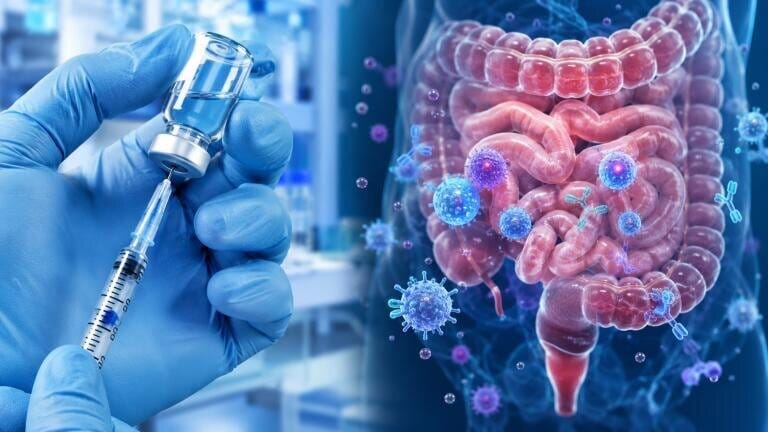
Researchers at the Massachusetts Institute of Technology have developed an experimental injectable polio vaccine strategy designed to combine the safety of inactivated polio vaccine with the mucosal immunity usually associated with oral polio vaccine
Researchers at the Massachusetts Institute of Technology (MIT), Cambridge, Massachusetts, USA, have developed an experimental approach that could allow an injectable polio vaccine (IPV) to stimulate mucosal immunity in the gut, a response that is usually associated with the oral polio – an important development which would help to prevent onward viral transmission.
In many countries worldwide, children routinely receive an inactivated IPV. This vaccine is highly effective at preventing illness, including the severe paralysis that can result from poliovirus infection. However, it does not prevent transmission as effectively as the oral polio vaccine (OPV) because it produces weaker immune protection at the mucosal surfaces of the gastrointestinal tract.
Poliovirus is usually transmitted through contaminated food or water which means the gastrointestinal tract is often the first site of exposure. The OPV can trigger a mucosal immune response in this part of the body, which helps to reduce infection and viral spread. However, because the oral vaccine uses live attenuated virus, it carries the rare, but serious risk, that the weakened virus can mutate and regain the capacity to cause infection. This has led many countries to stop routine use of the oral vaccine.
The MIT team has now reported a method to modify the immune response produced by the injectable vaccine. The approach used the current inactivated polio vaccine (IPV) alongside a nanoparticle-based adjuvant designed to steer immune cells towards the mucosal lining of the intestine. In a rat study, the formulation produced a 20-fold increase in the type of antibodies associated with mucosal immunity, compared with inactivated polio vaccine alone.
“People who are vaccinated with the injectable vaccine are not getting sick but they may be helping the virus to circulate. Mucosal immunity could help lower that [viral] shedding and ideally eliminate it,” said Dr. Ana Jaklenec, a principal investigator in MIT’s Koch Institute for Integrative Cancer Research.
In the study Jaklenec and Dr. Robert Langer, the ‘David H. Koch Institute Professor at MIT’, were senior authors of the paper alongside Dr. Behnaz Eshaghi, an MIT postdoctoral researcher, who was the lead author.
Polio has become rare across much of the world as a result of extensive vaccination campaigns but eradication has remained difficult. The virus is still endemic in Pakistan and Afghanistan while cases have occasionally been detected in the USA and other developed countries. Most cases occur among unvaccinated individuals but vaccine-derived poliovirus can also emerge in rare circumstances when live attenuated virus from the oral vaccine evolves to become infectious again.
The researchers also noted that people who have received the injectable vaccine may still shed poliovirus in their stool if exposed to the virus, even if they do not develop symptoms. In such circumstances, the virus may continue to circulate and could eventually reach someone who has not been vaccinated. Wastewater surveillance has shown that poliovirus can be detected even in countries with very high vaccination coverage.
A vaccine that could combine the safety profile of the inactivated injectable vaccine with the mucosal protection of the oral vaccine would therefore be valuable for global eradication efforts. To pursue this objective, the MIT researchers worked with researchers at Harvard Medical School, who had shown that a derivative of vitamin A could act as a vaccine adjuvant to help direct immune cells to the gastrointestinal tract.
The adjuvant – Am80 – has shown promise but it required injections on several consecutive days to produce a strong response. That schedule would be impractical for large-scale vaccine campaigns. The researchers therefore set out to develop a nanoparticle formulation that could release the adjuvant slowly across several days after a single administration.
After testing a variety of delivery systems the team found that a lipid nanoparticle worked best. In rat experiments, the researchers administered an injection of inactivated polio vaccine – similar to the one used in the USA – together with a separate injection of Am80 encapsulated in lipid nanoparticles. The animals then received booster doses after four weeks and eight weeks.
“The purpose of the nanoparticle is to make sure that we can engineer a platform with a sustained release of the cargo for a few days,” Eshaghi said.
“That way we can overcome the bottleneck that for free administration of Am80 you need multiple daily injections,” she added.
After injection, the nanoparticles accumulated in the lymph nodes, where they interacted with B cells and T cells exposed to the polio vaccine. This interaction stimulated the cells to produce surface proteins that acted as homing signals, directing them towards the gastrointestinal tract.
The B cells also began to produce immunoglobulin A, an antibody class that protects the body’s surfaces by coating mucosal membranes. The rats also produced immunoglobulin G, the antibody class that circulates in the bloodstream and is normally generated in response to injectable polio vaccination.
“IPV is a safe vaccine but it cannot create mucosal immunity. OPV can create that mucosal response but it is not as safe,” Eshaghi said.
“By adding Am80 to lipid nanoparticles as an adjuvant, we are combining the safety of IPV with an adjuvant that can produce the mucosal immunity that normally you can only get with OPV,” she said.
The researchers now plan to test the vaccine in larger animal models and to assess a formulation in which the vaccine and adjuvant are mixed together. If the approach proves successful, it could strengthen efforts to eliminate poliovirus circulation while avoiding the rare risks associated with live oral vaccines.
The strategy may also have implications beyond polio. Adjuvants that direct immune cells towards mucosal tissues could help researchers to design improved injectable vaccines against other pathogens that infect the gastrointestinal tract. The principle might also support future vaccine development for diseases that affect the lungs or reproductive tract, although the researchers cautioned that this remains to be established.
“You could potentially add it to any vaccine that’s injected,” Jaklenec said.
“This particular work shows that cells can be directed to the gut and increase enteric mucosal immunity. Whether it works for the respiratory or vaginal mucosa is not yet clear,” she concluded.
For further reading please visit: 10.1126/sciadv.aea5433
ILM 51.6 Sept 2026



 Product directory















,-photo-Karin-Allander.jpg)







.jpg)
