Research news
Researchers at King Abdullah University of Science and Technology (KAUST) have developed a wearable microneedle patch that continuously measures drug levels beneath the skin, offering a potential alternative to repeated blood sampling for medicines that require careful dose monitoring. The technology [1], reported in Device, wirelessly transmits drug concentration data to a smartphone in real time.
Many medicines, including antibiotics, chemotherapy drugs and immunosuppressants, must remain within a narrow therapeutic range to be both safe and effective. Current monitoring methods typically rely on periodic blood tests, providing only a snapshot of drug levels. The KAUST device aims to provide continuous measurements, giving clinicians a more complete picture of how medicines behave inside the body.
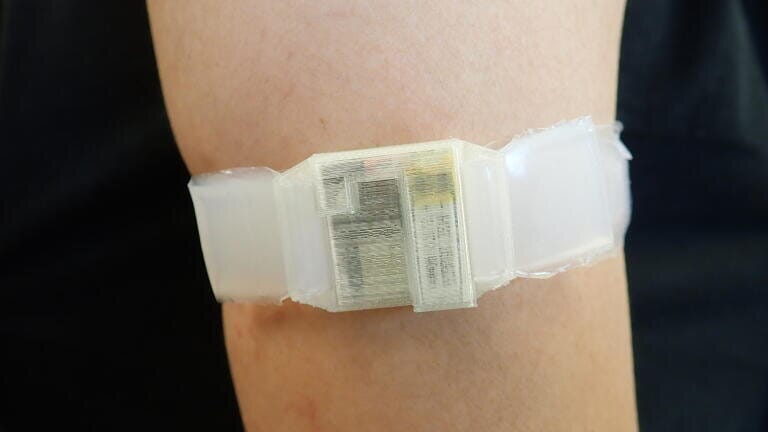
The lightweight, 6.7 g wearable combines an array of microscopic needles that sample interstitial fluid beneath the skin with electrochemical biosensors, onboard electronics, Bluetooth communication and smartphone visualisation. Together, these components enable continuous tracking of drug concentrations without the need for conventional blood sampling.
To demonstrate the platform, the researchers monitored vancomycin, an antibiotic widely used to treat serious infections that requires close therapeutic monitoring. Laboratory and preclinical studies showed the device could successfully track changing drug concentrations over several hours.
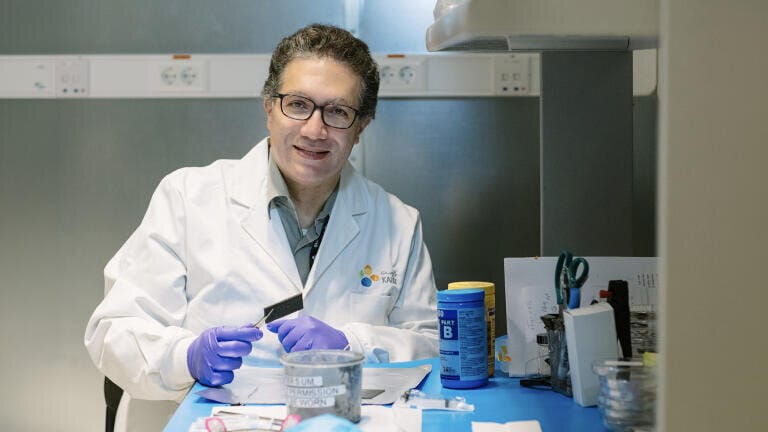
"Wearable technologies have changed the way people monitor many aspects of their health, from physical activity to heart rate and sleep," said Professor Khaled Nabil Salama, lead author of the study. "This research explores whether future wearable devices could also help us understand how medicines behave inside the body."
Although still at an early stage of development, the researchers believe the sensing platform could eventually be adapted for a wide range of medicines requiring precise dose management. Future work will focus on extending monitoring duration, improving long-term stability and evaluating the technology across additional therapeutic applications.
More information online
1. Aptamer-based microneedle sensing platform for in vivo drug monitoring published in Device
ILM 51.6 Sept 2026



 Product directory




















,-photo-Karin-Allander.jpg)







.jpg)
