Research news
Duke-NUS researchers have found that weakening muscle may send signals that encourage tumour growth in older adults and that exercise can restore the muscle’s protective effect
Scientists at Duke-NUS Medical School have found that ageing muscle may contribute to cancer growth by releasing fewer extracellular vesicles ‒ tiny particles that cells use to communicate with one another. The study also found that the composition of these particles changes with age, weakening protective signals that help to suppress tumour development. Encouragingly, however, exercise appears to restore this protective function.
The findings offer fresh insight into healthy ageing and cancer prevention and point to potential biomarkers and therapies tailored to older adults. The research was carried out in fruit flies, mouse cells and mouse cancer models rather than in humans with the team having said that human validation is the necessary next step before any clinical application can be considered.
The effects of ageing muscle are especially evident in sarcopenia, a condition marked by the loss of skeletal muscle mass and strength as a person grows older. In Singapore – where the study was conducted – it affects nearly one in three people aged 60 and above with considerable impact on mobility, personal independence and quality of life.
Working with collaborators from the Singapore General Hospital and from Cardiff University in the UK, the scientists found that sarcopenic muscle secretes fewer extracellular vesicles. As muscle ages, these vesicles have also been found to contain lower levels of miR-7a-5p, a microRNA that helps to regulate gene expression by controlling the types and amounts of proteins that cells produce. It is understood to also play a role in restraining tumour growth.
Importantly, the team also found that the release of extracellular vesicles from muscle is governed by a biological pathway that declines with age but can be reactivated through exercise.
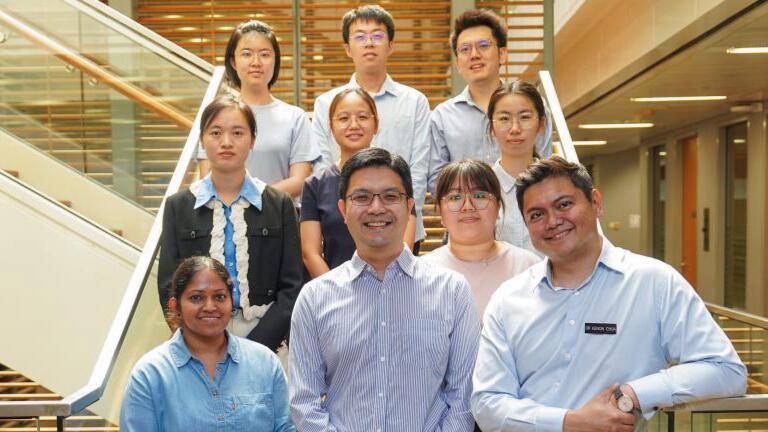
“Muscle cells use extracellular vesicles to send messages and to influence how other cells behave but exactly how these messages are delivered and received is not fully understood. Our research uncovers this hidden process, showing that as muscles weaken with age, these signals can change in ways that can promote tumour growth,” said Assistant Professor Tang Hung-Wen, from the Cancer and Stem Cell Biology Signature Research Programme at Duke-NUS Medical School and senior author of the study.
“Clinically, we observe an association between advanced cancer and low muscle mass. This is a novel study which illustrates how healthy muscle can potentially inhibit tumour growth. We observe that healthy muscles secrete many physiologically important molecules.
“With advanced age, it is even more important to engage in regular resistance and aerobic exercises in order to maintain healthy muscle volume,” said Dr Kenon Chua, consultant in the department of orthopaedic surgery at Singapore General Hospital and one of the study’s authors.
“This is important not only for function and mobility but also for general health. We hope that the insights from our research can help us to develop new targeted therapies for our patients, as well as to convince more people of the benefits of regular exercise,” he added.
With their study, the scientists have established a direct biological link between aged muscle and tumour growth. Together, the findings reveal a muscle-to-tumour communication pathway that could be targeted to develop therapies aimed at preventing cancer progression.
“This study opens new avenues for therapeutic strategies to preserve muscle health and to reduce cancer risk while also underscoring the importance of physical activity in ageing.
“We hope that policymakers in Singapore … will use this evidence to support greater investment in healthy ageing programmes and exercise-based interventions,” said Professor Lok Shee Mei, interim vice-dean for research at Duke-NUS Medical School.
The scientists next plan to validate their findings in human tissue and to determine whether extracellular vesicles ‒ particularly the miR-7a-5p they carry ‒ could serve as biomarkers for assessing the risk of cancer which is associated with sarcopenia.
For further reading please visit: 10.1038/s41467-026-72410-y
ILM 51.6 Sept 2026



 Product directory



















,-photo-Karin-Allander.jpg)




.jpg)
