News
Published over 13 years ago. See the latest and most current information on News.
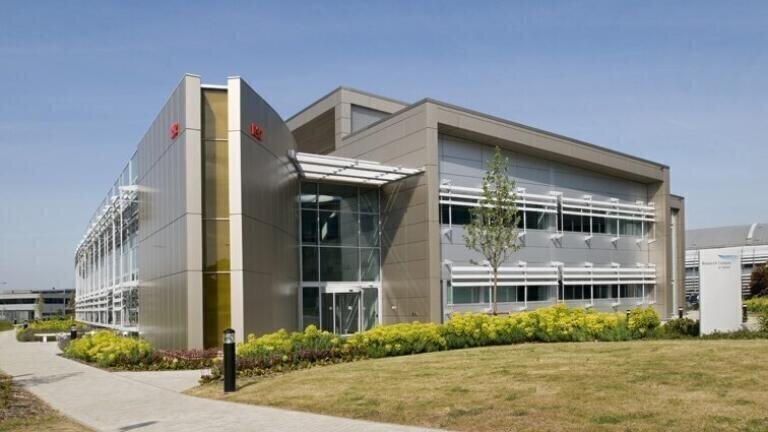
EPSRC has announced a £12.9M investment in a UK catalysis hub, which will be based at the Research Complex at Harwell (RCaH) on the STFC Rutherford Appleton Laboratory (RAL) site, and will make extensive use of RAL facilities including ISIS.
ISIS scientist Stewart Parker is a co-investigator within the Catalyst Design theme of the Hub which is being led by Prof Richard Catlow of University College London. This theme – awarded £3.7M within the overall Hub award – will involve in-situ characterisation of catalyst materials, enabling the structure and evolution of catalysts to be probed at the molecular level during their operation.
‘The opportunity to be involved in a UK-wide project for world-class catalysis studies is very exciting’, Stewart said. ‘Neutrons at ISIS will provide essential atomic-level information on catalysis operation, enabling new, advanced catalytic materials to be developed’.
Also involved in the UK Catalysis Hub are ISIS users Prof Chris Hardacre (Queen’s University Belfast), Dr David Lennon (University of Glasgow) and Prof Matt Rosseinsky (University of Liverpool).
ISIS, the Science and Technology Facilities Council’s (STFC) world-leading neutron and muon source and Diamond welcome the announcement of the investment into Catalysis science, which was said to be critical for the country’s chemical, energy, pharmaceutical, food, personal care and materials sectors.
ILM 51.6 Sept 2026

 Product directory















.jpg)
,-photo-Karin-Allander.jpg)



.jpg)