News
Published over 6 years ago. See the latest and most current information on News.
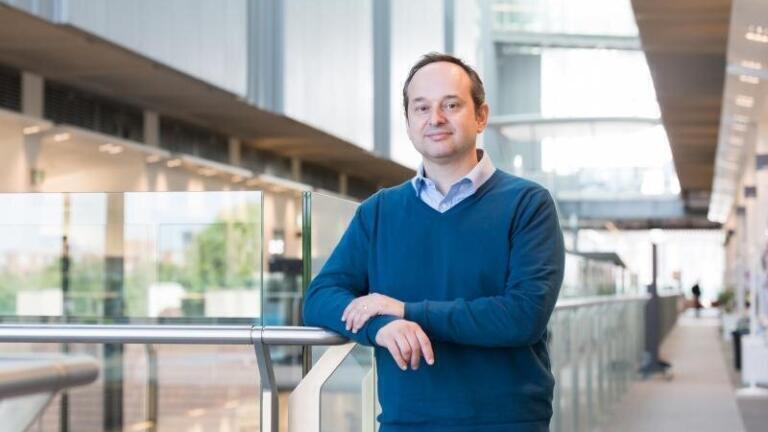
In recognition of his outstanding research, Luiz Carvalho, group leader of the Mycobacterial Metabolism and Antibiotic Research Laboratory at the Francis Crick Institute has received an American Chemical Society (ACS) Infectious Diseases Young Investigator Award.
Over his career so far, Luiz has focused on the bacterial infection tuberculosis (TB) and related antibiotic research. His group at the Crick now works on the discovery and characterisation of biochemical, metabolic and pharmacological processes in the disease.
One major project led by Luiz, recently uncovered important findings about how the antibiotic D-cycloserine works, which could lead to new treatments for drug resistant TB.
Around 1.7 million people die of TB globally each year, with some of highest rates seen in Sub-Saharan Africa and South Asia.
On receiving the news, Luiz said: “Receiving this award means a lot to me. I am super excited about a number of ongoing projects in my lab and the plan is to continue investigating the metabolism and biology of Mycobacterium tuberculosis, the bacteria that causes TB”.
“I am indebted to my family, colleagues, mentors and collaborators and to the Wellcome Trust and the Crick for allowing me to carry out bold, imaginative blue-sky research on the world’s most important bacterial pathogen.”
ILM 51.6 Sept 2026


 Product directory


.jpg)
.jpg)
















.jpg)
