News
Published over 8 years ago. See the latest and most current information on News.
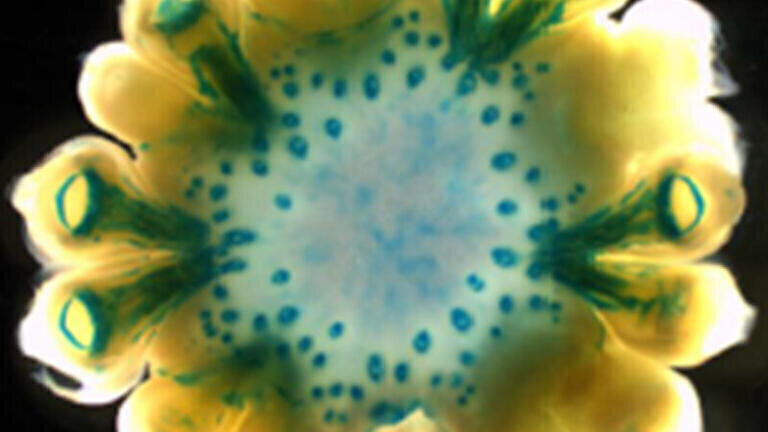
From initial studies which used a technique shown to make maize more productive even in droughts, biologists have since accumulated more detailed knowledge of the plants response to the alteration process and are hopeful that this can be applied to other crops.
Three years ago, the researchers demonstrated in field trials that they could increase the productivity of maize by introducing a rice gene into the plant that regulated the accumulation of sucrose in kernels and led to more kernels per maize plant. They knew that the rice gene affected the performance of a natural chemical in maize, trehalose 6-phosphate (T6P), which influences the distribution of sucrose in the plant. The next stage was to discover more details of the relationships governing the increased productivity.
Plant biochemist Matthew Paul, who led the Anglo-American team from Rothamsted Research and Syngenta, a biotechnology company that also funded the work, said; “Now we know far more about how this yield effect has been achieved.”
The transgenic maize depressed levels of T6P in the phloem, a major component of the plant’s transportation network, allowing more sucrose to move to developing kernels and, serendipitously, increasing rates of photosynthesis, thereby producing even more sucrose for more kernels.
The team also chose to target the phloem within the plant’s reproductive structures. “These structures are particularly sensitive to drought – female kernels will abort,” Matthew Paul said. “Keeping sucrose flowing within the structures prevents this abortion.”
He added: “This is a first-in-its-kind study that shows the technology operating effectively both in the field and in the laboratory. We also think that this could be transferred to other cereals, such as wheat and rice.”
Rothamsted Research is the oldest agricultural research institute in the world and is strategically funded by BBSRC.
Findings were published in Plant Physiology and the paper describing the earlier field trials was published in 2015 in Nature Biotechnology.
ILM 51.6 Sept 2026


 Product directory


.jpg)
.jpg)