Research news
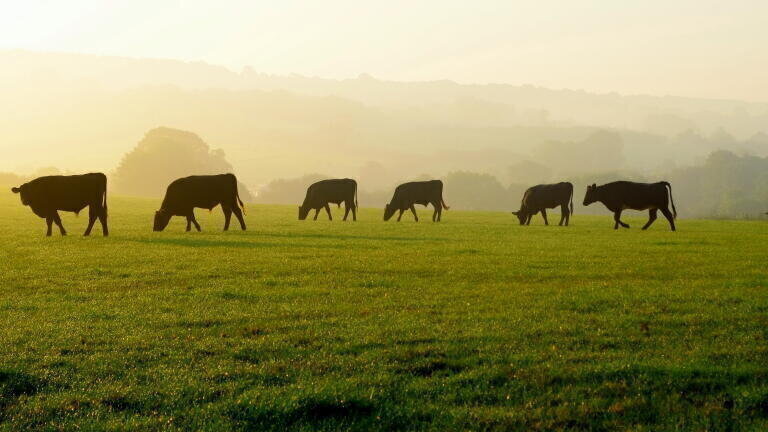
Researchers have identified multiple strategies that could significantly reduce the carbon footprint of UK grass-fed beef production, with potential reductions of up to 26%. The study [1], conducted using data from Rothamsted’s North Wyke Farm Platform in Devon, modelled various mitigation interventions to assess their impact on greenhouse gas emissions.
Findings suggest that adopting nitrification inhibitors could lower emissions from beef farming by 7.5%, while integrating nitrogen-fixing leguminous white clover into pasture systems could achieve a reduction of 12%. The most effective intervention involved anaerobic digestion of cattle manure, which demonstrated the potential to cut emissions by as much as 26%.
The study also explored the effects of reducing livestock density by 50%, revealing an unintended consequence. While a lower stocking rate might intuitively seem beneficial for reducing agricultural emissions, the carbon footprint per unit of weight gain actually increased by 24.5%. This was attributed to the fact that soil-related emissions remained unchanged despite the drop in production, leading to a higher environmental impact per unit of output.
Agriculture accounts for approximately 10% of the UK’s total greenhouse gas emissions, with livestock production responsible for 56% of that figure. Within this sector, beef cattle contribute 30-40% of total emissions, making targeted interventions in beef farming a critical component of climate change mitigation efforts.
Lead researcher Asma Jebari from Rothamsted emphasised the significance of these findings, highlighting that practical on-farm changes could yield substantial reductions in emissions. She also noted the importance of considering factors beyond direct emissions, such as soil organic carbon, when evaluating the environmental impact of different farming practices.
While the proposed measures offer promising pathways to reducing the carbon footprint of beef farming, researchers stress the need for further analysis and long-term field trials to determine the broader feasibility and effectiveness of these strategies.
More information online
1. AJebari, A., Takahashi, T., Lee, M.R.F. et al. Carbon footprints of greenhouse gas mitigation measures for a grass-based beef cattle finishing system in the UK. Int J Life Cycle Assess (2025). https://doi.org/10.1007/s11367-025-02428-9
ILM 51.6 Sept 2026



 Product directory


.jpg)
.jpg)
















,-photo-Karin-Allander.jpg)