News
Published over 11 years ago. See the latest and most current information on News.
A smart sensor chip able to pick up on subtle differences in glycoprotein molecules and believed to have ability to improve the accuracy and efficiency of prostate cancer diagnosis has been developed by scientists at the University of Birmingham.
The team of chemical engineers and chemists created the chip with synthetic receptors along a 2D surface to identify specific, targeted glycoprotein molecules that are differentiated by their modified carbohydrate chains, unlike current tests which rely heavily on antibodies which are less robust and have been shown to have a high rate of false-positive readings.
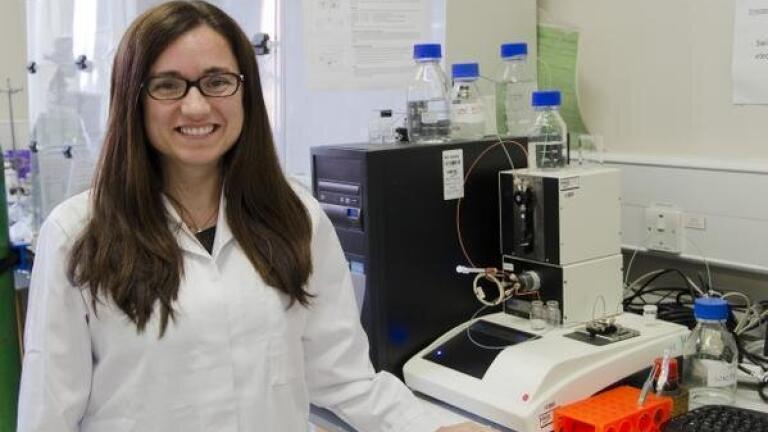
Professor Paula Mendes, School of Chemistry at the University said, “There are two key benefits here. Crucially for the patient, it gives a much more accurate reading and reduces the number of false positive results. Furthermore, our technology is simple to produce and store, so could feasibly be kept on the shelf of a doctors’ surgery anywhere in the world. It can also be recycled for multiple uses without losing accuracy.”
Professor Mendes added, “Biomarkers such as glycoproteins are essential in diagnostics as they do not rely on symptoms perceived by the patient, which can be ambiguous or may not appear immediately. However, the changes in the biomarkers can be incredibly small and specific and so we need technology that can discriminate between these subtle differences – where antibodies are not able to.”
To engineering the sensor chip, the team developed a smart surface with nano-cavities that fit only the particular target glycoprotein.
Professor Mendes said, “It is essentially a lock, and the only key that will fit is the specific prostate cancer glycoprotein that we’re looking for. Other glycoproteins might be the right size, but they won’t be able to bind to the very specific arrangement of boron groups.”
Dr John Fossey, School of Chemistry, Birmingham added, “It’s estimated that one in eight men will suffer from prostate cancer at some point in their life, so there’s a clear need for more accurate diagnosis. By focussing on the sugar, we appear to have hit the ‘sweet spot’ for doing just that. Our focus now is to take this technology and develop it into something accessible to people across the world.”
The team also hope that further investment and collaboration with commercial partners will open the door to adapting the current technology for other diseases.
*Findings Published in Chemical Science
ILM 51.6 Sept 2026



 Product directory


























.jpg)
