Research news
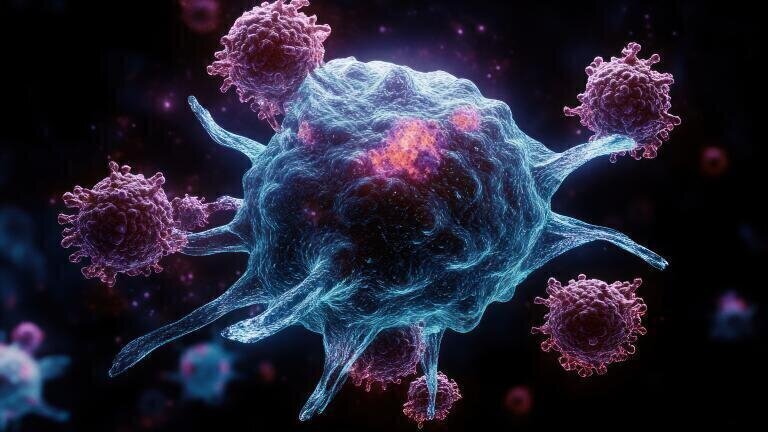
Researchers at the University of Birmingham, in collaboration with the NIHR Birmingham Biomedical Research Centre and the University of Turku, Finland, have identified a circulating form of the protein Clever-1 (sClever-1) that suppresses T cells and may explain why some cancers resist immunotherapy.
Published in Theranostics, the study [1] shows that high levels of sClever-1 in patient blood are associated with resistance to anti-PD-1 therapy, a widely used cancer treatment. Importantly, the investigational antibody bexmarilimab was found to block sClever-1 release, potentially restoring the immune system’s ability to attack tumours.
Analysing plasma from 138 breast cancer patients, 193 patients with advanced solid tumours, and 21 healthy donors, the team found that inflammatory signals in the tumour microenvironment trigger sClever-1 release from immune cells such as macrophages. The circulating protein then binds to activated T cells, dampening their anti-tumour activity.
Professor Shishir Shetty (University of Birmingham) said: “High sClever-1 levels could predict which patients won’t respond to standard immunotherapy. Using bexmarilimab, we may be able to make immunotherapy effective again and design smarter combination treatments for advanced cancers.”
Dr Maija Hollmén (University of Turku) added: “Our drug retrains immune cells to fight cancer and stops the release of substances that paralyse other immune cells. These findings provide a clearer picture of how cancer evades the immune system.”
More information online
1. Secreted Clever-1 modulates T cell responses and impacts cancer immunotherapy efficacy published in Theranostics
ILM 51.6 Sept 2026



 Product directory




















,-photo-Karin-Allander.jpg)





.jpg)
