Research news
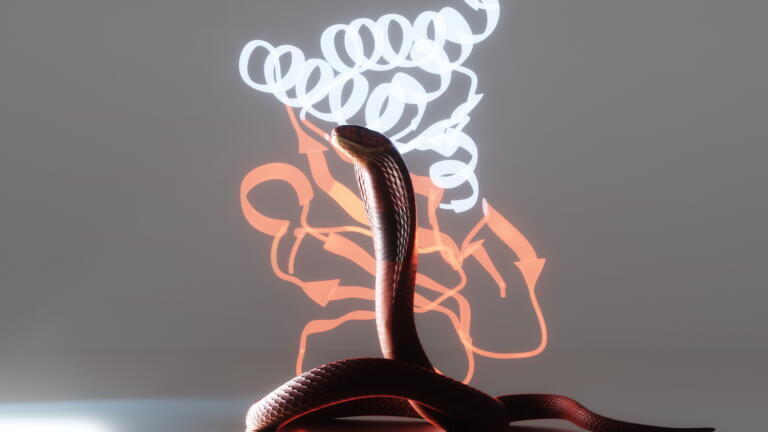
Team of 2024 Nobel Laureate in Chemistry create new proteins that neutralise lethal snake venom toxins
This year's Nobel Laureate in Chemistry has revealed a potential game-changer in the treatment snakebites. Researchers have used an artificial intelligence (AI) to model novel proteins that are effective against the lethal toxins found venom. The work offers potentially safer and more effective alternatives to current antivenoms.
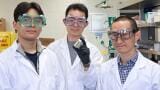
David Baker of the University of Washington (UW) School of Medicine, and this year’s Nobel Laureate in Chemistry, along with Timothy Patrick Jenkins from the Technical University of Denmark (DTU) used deep learning tools to design new proteins that bind to and neutralise toxins found in cobras.
Currently, the only antivenoms available to treat snakebites are derived from animal plasma and often come with associated high costs, limited efficacy and adverse side effects.
Venoms also differ between snake species, requiring custom treatments for the variety of Ophidia found in specific regions of the world.
While not yet protecting against full snake venom ─ which is a complex mixture of different toxins unique to each snake species ─ the AI-generated molecules have been shown to provide in mice full protection from lethal doses of so-called ‘three-finger toxins’ at a 80-100% survival rate; depending on the dose, toxin and designed protein.
The research has demonstrated that AI-accelerated protein design can be used to neutralise harmful proteins in humans that otherwise would have proven difficult for the human system to combat.
The team reasoned that creating proteins that stick to and disable snake toxins could create several advantages over traditional treatments. The new antitoxins can be manufactured using microbes, circumventing traditional animal immunisation with the potential to cut down on commercial production costs.
“Protein design will help make snake bite treatments more accessible for people in developing countries,” said Susana Vazquez Torres, lead author of the study and a researcher in Baker’s lab at the Institute for Protein Design at UW Medicine.
“The antitoxins we’ve created are easy to discover using only computational methods. They’re also cheap to produce and robust in laboratory tests,” added Baker.
There are further advantages, explained Timothy Patrick Jenkins, an associate professor at DTU Bioengineering: “The most remarkable result is the impressive neurotoxin protection they afforded to mice. However, one added benefit of these designed proteins is that they are small ─ so small, in fact, that we expect them to penetrate tissue better and potentially neutralise the toxins faster than current antibodies.
“And because the proteins were created entirely on the computer using AI-powered software, we dramatically cut the time spent in the discovery phase,” he concluded.
According to the World Health Organization (WHO), venomous snakebites affect between 1.8 and 2.7 million people each year, leading to roughly 100,000 annual deaths. Many survivors have permanent disabilities which can include lost limbs with most injuries happening in Africa, Asia, and Latin America, where weaker health systems can aggravate the issue.
According to the scientists, the drug development approach described in this study could also be useful for many other diseases that lack treatments today, including certain viral infections. Because protein design generally requires fewer resources than traditional lab-based drug discovery methods, there is also the potential to generate new but less costly medicines for more common diseases using a similar approach.
Although these results are encouraging, the team stresses that traditional antivenoms will remain the cornerstone in treating snakebites for the foreseeable future. The new computer-designed antitoxins could initially become supplements or fortifying agents that improve the effectiveness of existing treatments until standalone next-generation therapies are approved.
For further reading please visit: 10.1038/s41586-024-08393-x
—Additional reporting by Alan Booth
ILM 51.6 Sept 2026



 Product directory

















,-photo-Karin-Allander.jpg)






.jpg)
