Centrifuge
Published over 8 years ago. See the latest and most current information on Centrifuge.
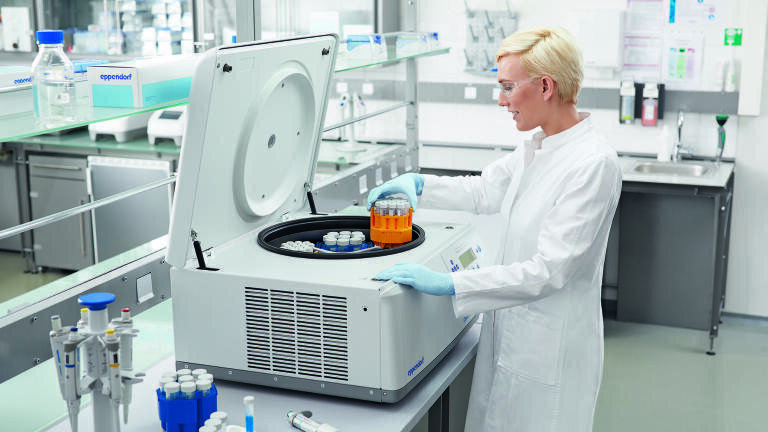
Eppendorf started off the year by introducing not one, but two new centrifuges: A generation change at the small 24-place benchtop centrifuges. In the segment of the large refrigerated benchtop centrifuges Eppendorf is expanding the product range with a particularly versatile, high-capacity variant.
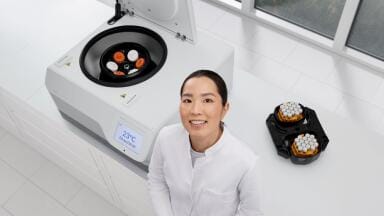
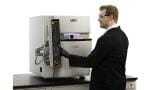
The new Centrifuge 5425 holds up to 24 vessels with a volume of 1.5 or 2.0 mL. A new swing-out rotor for 96 PCR tubes broadens the spectrum of molecular applications. Harvesting bacteria and yeast cells is facilitated by a new fixed-angle rotor for 5 mL tubes. The Centrifuge 5425 replaces the legendary Centrifuge 5424; it scores with a whole string of improvements, the highlights of which include certified aerosol-tight Eppendorf QuickLock® rotor lids for simple and safe handling.
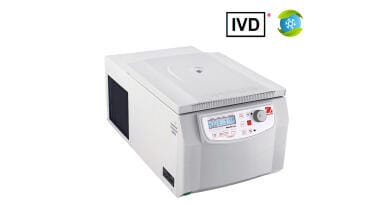
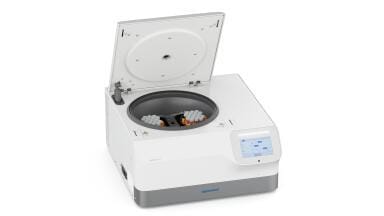
The new Centrifuge 5910 R convinces with its versatility and capacity. Cell harvests carried out in bottles up to 750 mL, large scale purification of DNA/RNA as well as Ficoll® gradients are just a few examples of the many areas of application that are served by this new centrifuge. The new universal adapters facilitate even quicker loading; using these new adapters, conical vessels of up to 50 mL, plates and 250 mL bottles may be centrifuged for the very first time without the need for changing rotor, rotor buckets or adapters.
ILM 51.6 Sept 2026




 Product directory












.jpg)