Sold in Europe by Copley Scientific, wide-range particle spectrometers from MSP Corporation are being used to deliver precise, accurate data about air pollution in and around Beijing in conjunction with the Olympic Games.
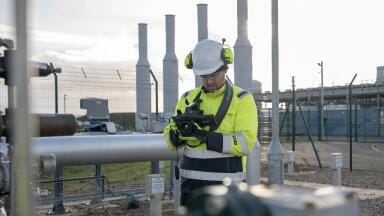
Ahead of the Olympics, the Hong Kong Polytechnic University and Shandong University, working with Chinese environmental authorities, implemented MSP`s Model 1000XP Wide-Range Particle Spectrometers to measure airborne particles. Measurements were made before, and continued during and after the Games in central, upwind and downwind locations around the city.
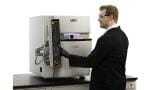
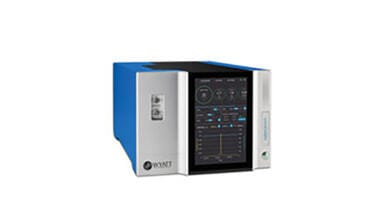
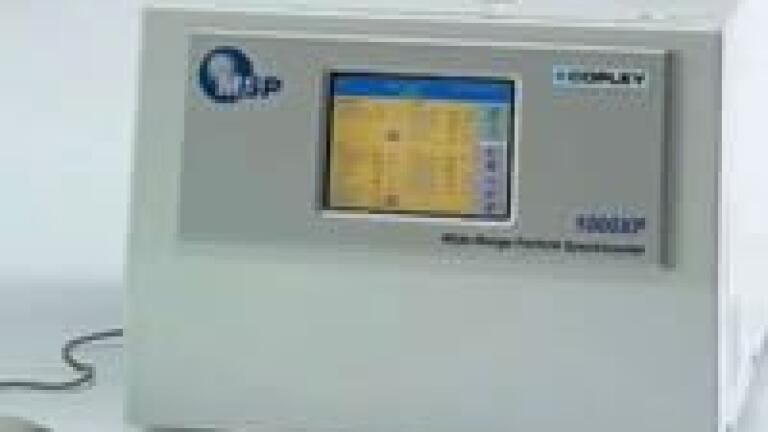
MSP`s M-1000XP Wide-Range Particle Spectrometer is a unique particle-measuring instrument that uses laser light scattering, differential mobility analysis and condensation particle counting to measure and sort aerosol particles as small as 10 nanometers into 120 different size channels. Ten nanometers is the size of the smallest known virus, or roughly 1/10,000th the thickness of a human hair. Researchers
will use these data to learn about particle formation and growth in
different locations in Beijing.
The Wide-Range Particle Spectrometer was developed by a team of scientists and engineers at MSP, an aerosol/particle technology company based in Shoreview, MN. The instrument is used by researchers
worldwide for highly precise and accurate airborne particle measurement in air pollution studies and laboratory research.

 Product directory