Quantitech Ltd has published an Application Note on the analysis of Mercury in food and beverages.
Mercury is a cumulative heavy metal poison which occurs in its elemental form, inorganically as salts, or organically as organomercury compounds.
Some foods contain significant levels of mercury; tuna for example may contain mercury at levels that are unhealthy for higher-risk groups such as expectant mothers and young children. Other food products, less notorious for their mercury content, contain mercury at concentrations which may be worthy of evaluation.
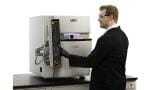
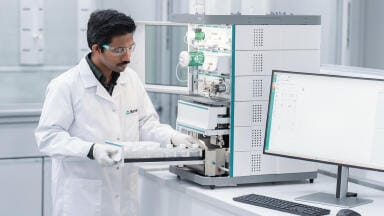
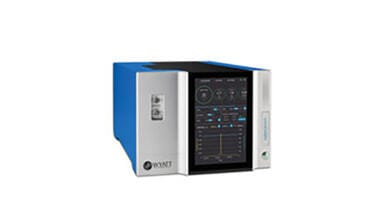
Quantitech supplies the Leeman Labs Hydra-C (Direct Mercury Analyser) which provides a fast, simple and convenient approach for the analysis of mercury without any sample pretreatment and without any hazardous chemical wastes. Typical analysis times are about 5 minutes per sample. Hydra-C employs EPA Method 7473 which is approved for both laboratory and field analysis for mercury in solids and solutions using Thermal Decomposition, Amalgamation and Atomic Absorption Spectrophotometry.
The application note shows how a variety of food products, when tested with the Hydra-C, showed excellent correlation with certified values. Results were obtained without any sample treatment in about 5 minutes per sample.
Click Here to view the application note


 Product directory