Chromatography
Published over 5 years ago. See the latest and most current information on Chromatography.
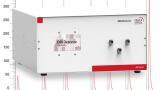
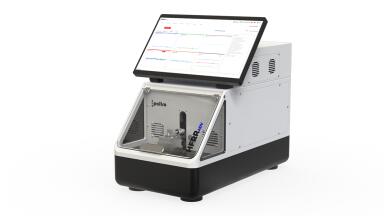
The Differential Refractive Index (DRI) detector from Testa Analytical Solution eK offers unmatched accuracy and reliability for determination of absolute concentration and total mass balance in Gel Permeation Chromatography/Size Exclusion Chromatography (GPC/SEC) applications.
The baseline signal stability of any liquid chromatography detector is very important, as it is a limiting factor in peak determination. Detector stability gains even more importance where analysis time is long, such as is commonly encountered in high resolution GPC/SEC applications.
Use of multiple columns is common in GPC/SEC as a technique to increase resolution and also to increase the available dynamic range in terms of molecular weight. As such, high resolution GPC/SEC measurements can often take 30 to 60 minutes for a single separation. As a result, most HPLC detectors adapted for use in GPC/SEC will show a significant baseline drift between the beginning and end of the chromatogram thus negatively influencing the ability to accurately determine the beginning and end of sample peaks and therefore to calculate the correct polydispersity.
Operating from room temperature up to 80°C with high thermal stability, Testa Analytical's DRI detector has been designed with particular attention to eliminating drift. As a consequence of its unmatched baseline stability, the DRI detector delivers excellent performance for chromatographic separations of any duration.
More information online
ILM 51.6 Sept 2026





 Product directory