A type of laser inspired by the whispering gallery at St Paul's Cathedral could have new applications in
clinical laboratory IT solutions.
The device is being researched at Harvard University and offers a way to create low-attenuation lasers.
It works thanks to a basic principle noticed a century ago - that the laser, like the sound in the dome of St Paul's Cathedral, can skim along the circular outer surface without scattering or being absorbed.
However, until now, scientists have found it difficult to make the laser light re-emerge from the device in a useful way.
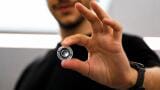
The Harvard team now say an elliptical disk with a notch the size of the laser light's wavelength can yield a well-collimated beam without suffering high attenuation.
Research team leader Federico Capasso says: "[Previous] strategies to suitably deform the disks to solve this problem have yielded disappointing results."
With the new technique, the team could develop the technology for use in
clinical laboratory IT solutions or optoelectronics.
Harvard scientists have also recently reported reversing the ageing process in mice, allowing brain functionality to be restored.



 Product directory