Pipettes
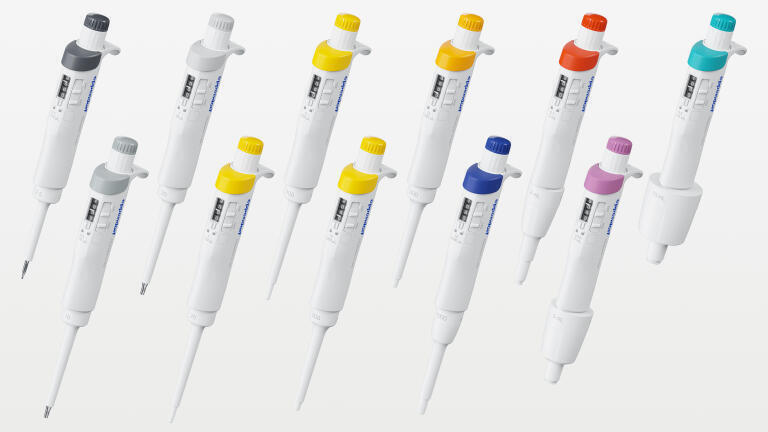
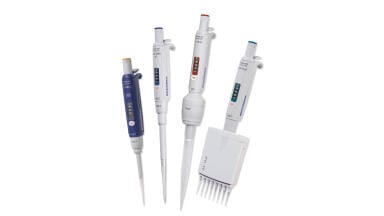
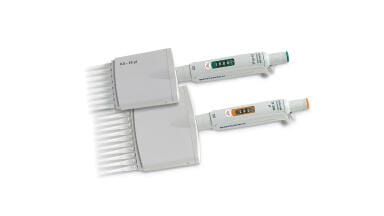
Eppendorf has officially introduced its newest generation of mechanical pipettes, the Research® 3 neo, now available worldwide. Designed for scientists who demand precision but also value comfort and flexibility, the Research 3 neo combines trusted Eppendorf performance with smart innovations that adapt to any workflow.
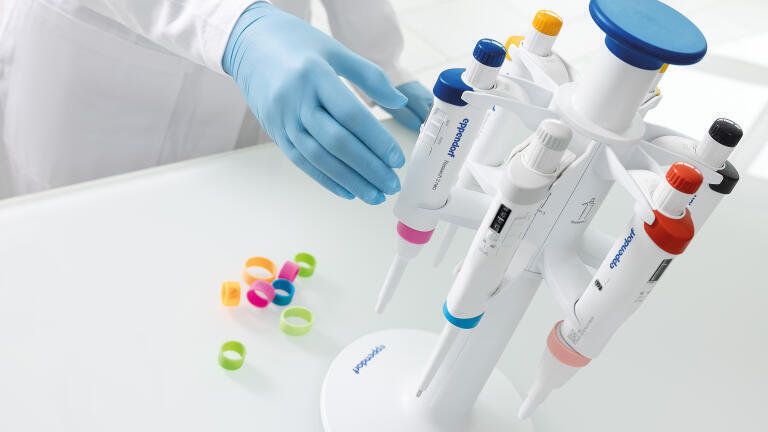
At the core of the Research 3 neo is adaptability. With a simple switch, users can choose between fast or fine volume setting speeds, making it just as effective for high-throughput tasks as it is for meticulous assays. The pipette also offers temporary adjustments for liquid type, tip geometry, reverse pipetting, or even altitude - delivering consistent accuracy without the need of recalibration. New ColorTag rings (sold separately) provide an easy way to label pipettes for personal or team use.
Eppendorf has reimagined ergonomics with a shorter pipetting button, lightweight balance, and an ergonomic finger hook to reduce strain during long pipetting sessions. Low tip attachment and ejection forces add to the comfort, ensuring effortless use without sacrificing speed.
True to Eppendorf’s reputation, the Research 3 neo exceeds ISO 8655 standards when paired with epT.I.P.S.® tips. A newly integrated volume lock prevents accidental changes, giving scientists added confidence in every experiment.
Beyond precision, the Research 3 neo also sets new standards for eco-conscious lab tools. Manufactured in an ISO 14001 certified facility powered entirely by renewable energy, the pipette carries the ACT® label for environmentally responsible design. It arrives in recycled, recyclable packaging and is compatible with epT.I.P.S.® BioBased tips, made from 100% biobased polypropylene via a mass-balance approach, reducing the carbon footprint of daily lab work.
Christiane Markau, Product Innovation Manager at Eppendorf SE, commented:
“Our mission was to create a pipette that truly fits every user. The Research 3 neo delivers adaptability, comfort, and reliability - helping scientists focus less on their tools and more on their discoveries.”
More information online
ILM 51.6 Sept 2026



 Product directory



















.jpg)
