.jpg)
Laboratory products
Oxidative stability plays a decisive role in maintaining the quality and safety of food products. When oxygen reacts with ingredients such as fats and oils, it can trigger degradation processes that lead to rancidity, off-flavours, nutrient loss, and, in some cases, the formation of undesirable by-products. This results not only in compromised product quality but also significantly shortened shelf life. For this reason, antioxidants and optimised formulations are essential tools for preserving product freshness and protecting brand integrity.
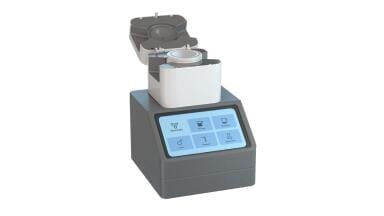
RapidOxy 100 is an automated solution designed to determine and thoroughly investigate oxidation stability, providing deep analytical insight with high precision and reproducibility. By exposing samples to elevated temperatures and pure oxygen under pressure, it accelerates aging processes to quickly deliver accurate results.
The only instrument that performs the rapid small-scale oxidation test (RSSOT) in accordance with ASTM D8206, RapidOxy 100 directly measures oxygen consumption inside a closed measuring chamber. This makes it well-suited for research and development, quality control, and shelf-life investigations across a wide range of sample types.
Typical test conditions range from 80°C to 140°C, with an initial oxygen pressure of 700 kPa to initiate rapid oxidation. During the test, the system continuously records the pressure decrease caused by oxygen uptake until either a predefined pressure drop or a specified test duration is reached. The time to a defined pressure loss is determined or, alternatively, the magnitude of the pressure decrease within a fixed time is evaluated. Both correlate with the oxygen consumed by the sample, enabling reliable evaluation of the material’s oxidation stability.
With RapidOxy 100, instrument preparation and post-measurement cleaning are straightforward, taking less than five minutes. Samples can be analysed without additional preparation, enabling the investigation of products in their original state to support realistic shelf-life assessments.
The OxyLogger 100 desktop software enables easy comparison of measurement curves and automatically determines the oxidation induction time (OIT). Based on the selected evaluation method, the software applies the Arrhenius relationship to calculate activation energy or estimate shelf life. Oxygen consumption can also be calculated at any point during the test to provide deeper insight into oxidation behaviour. With its automated operation, standardised RSSOT compliance, and powerful evaluation tools, RapidOxy 100 supports laboratories in making faster, data-driven decisions about product stability and shelf life.
“RapidOxy 100 helps labs turn oxidative stability testing into fast, reproducible answers,” said Dr Carolin Edinger, Product Manager for RapidOxy 100 at Anton Paar. “ASTM D8206-compliant RSSOT measurements, minimal preparation, and clear curve evaluation make it easier to compare formulations and estimate shelf life with confidence.”
More information online
ILM 51.6 Sept 2026



 Product directory
















.jpg)
.jpg)
.jpg)