Laboratory products
Published over 16 years ago. See the latest and most current information on Laboratory products.
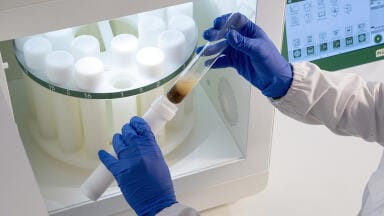
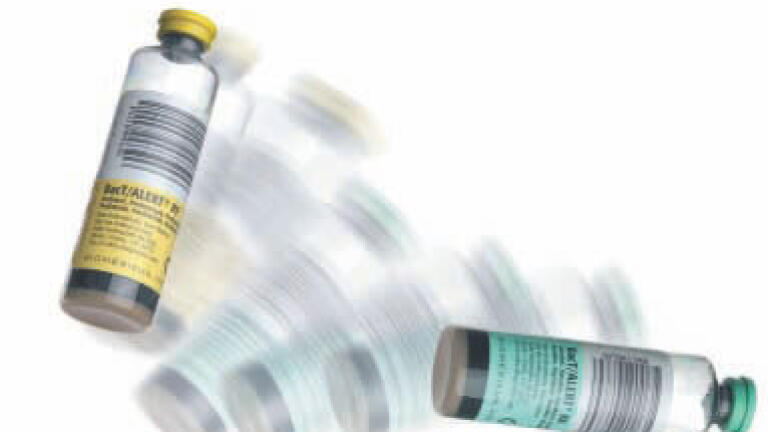
The Microbiology laboratory at the Royal Oldham Hospital, UK, has chosen bioMérieux’s BacT/ALERT microbial detection system for processing blood cultures. Sheila Norris, Technical Manager explained: “One of the primary drivers for change was that our previous system used glass bottles. After we centralised our service, we had several incidents involving breakage of glass bottles during transport between the wards and the lab. The BacT/ALERT uses plastic bottles, which means that this is no longer a problem. Another advantage of the BacT/ALERT is that we no longer need to incubate bottles prior to analysis - they can be kept at room temperature. False negative results caused by incorrect storage are less likely, and we don’t need to maintain incubators on all sites.”
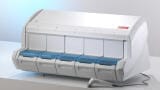
Sheila continued: “Although our new laboratory seemed quite large initially, we soon found ourselves short of space. The BacT/ALERT is less than half the size of our previous system, and its modular design means that we can easily add additional units if sample numbers rise. bioMérieux made sure that the transition to the BacT/ALERT was seamless and, within a week or two, we had moved completely to the new system. The instrument is easy to use, the software intuitive, and we received excellent training.”
ILM 51.6 Sept 2026


 Product directory